Fundamental Listening Skills
Harmonic Series (Reference)

Harmonic Partials on a String

Piano Pitch vs Frequency Map

| ISO Octaves | ET Frequency | Pitch |
|---|---|---|
| 63 | 61.7 | B1 |
| 125 | 123.5 | B2 |
| 250 | 246.9 | B3 |
| 500 | 493.9 | B4 |
| 1000 | 987.8 | B5 |
| 2000 | 1976 | B6 |
| 4000 | 3951 | B7 |
| 8000 | N/A | B8 |
| 16000 | N/A | B9 |
Ranges

Spectral Balance
Spectral balance: the distribution of energy across frequency bands from ~20 Hz to 20 kHz.
Tailoring Spectral Balance for Different Music Genres
- Different genres favor different balances (no single “correct” curve)
- Use references and style expectations
- Listen for masking (what disappears?) and buildup (what dominates?)
- Use analyzers to confirm, not to decide
Shaping Spectral Balance
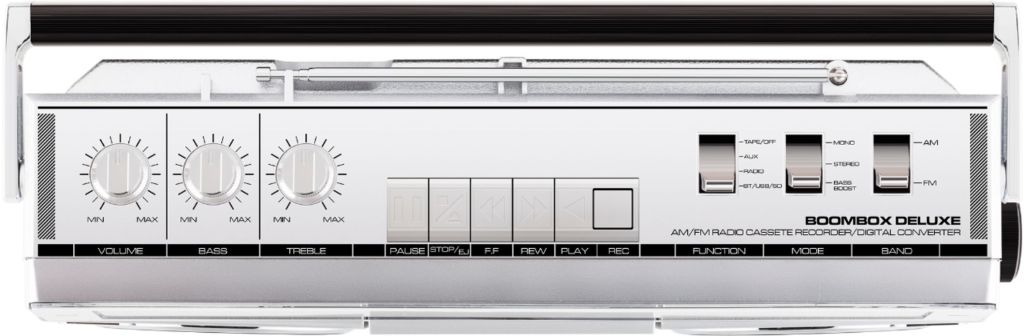
Equalization
Microphone Choice and Placement
- Charm Studio microphone list - see frequency response patterns.
- Compare mic placement with a different instrument.
- Listen for proximity effect and off-axis coloration.
Indirect Factors Affecting Spectral Balance
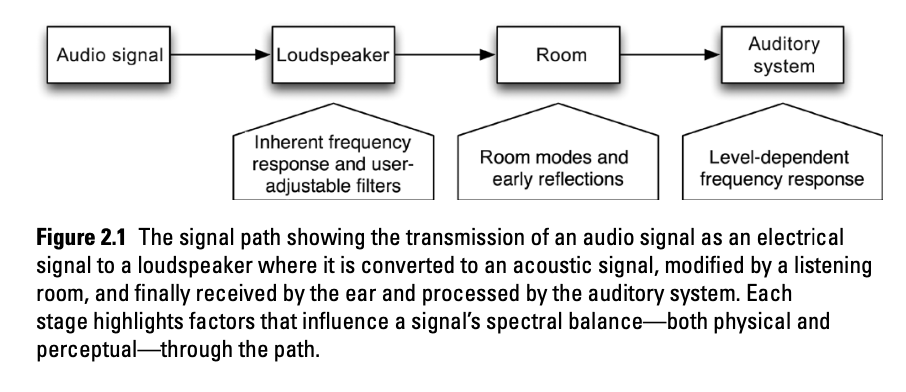
Role of Monitors and Loudspeakers in Audio Perception
- Your monitors have a “sound” (frequency response)
- Your room changes that sound (especially low end)
- Cross-check: headphones / second speakers / references
- Make decisions at consistent listening levels
Control Room and Listening Room Acoustics
- Room modes reshape bass (peaks/nulls)
- Reflections reshape clarity and imaging
- Speaker + listener placement matters
- Translation checks beat “perfect rooms”
Sound Levels and Their Effect on Spectral Balance
- Your ears change with volume (equal-loudness contours)
- Do most EQ work at moderate/quiet levels
- Check briefly loud (impact) and very quiet (balance)
- Take breaks to avoid “ear drift”
Types of Filters and Equalizers
- Filters remove; EQ boosts/cuts
- Most common: high-pass, low-pass, shelving
- Surgical control: parametric EQ (freq + gain + Q)
- Visual + fixed bands: graphic EQ
Filters: Low-Pass and High-Pass

- Cutoff frequency = “where it starts rolling off”
- Slope = “how steep the rolloff is” (dB/oct)
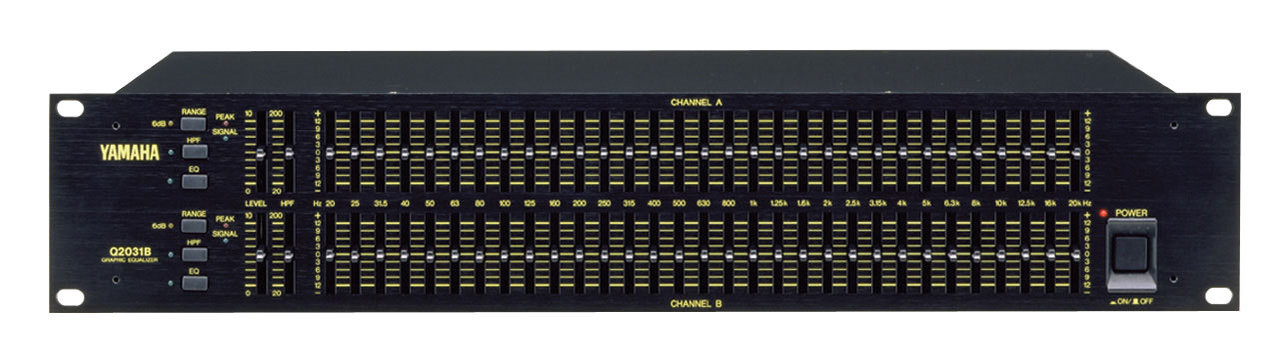
Graphic Equalizers
Parametric Equalizers
- Three knobs: frequency, gain, Q (bandwidth)
- Low Q = wide changes; high Q = narrow changes
- Use wide for tone shaping; narrow for problems
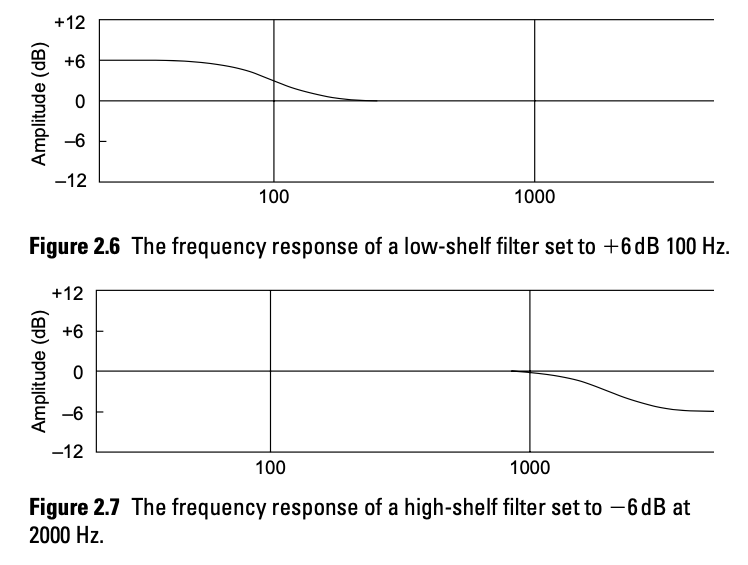
Shelving Equalizers
Getting Started with Practice
- Practice a little, often (10–15 minutes)
- Start with octave anchors (500 Hz–2 kHz)
- Keep gain/Q fixed at first; focus on recognition
Practice Types in WebTET
- Match (with reference)
- Match (memory)
- Return to flat (undo EQ)
- Absolute ID (name the settings)
Frequency Resolution
- Start with 1 octave (9 anchors)
- Add neighbors (1/3 octave) once anchors feel solid
- Strategy: find the nearest octave, then refine
- Example region: 800–1k–1.25k–1.6k–2k–2.5k
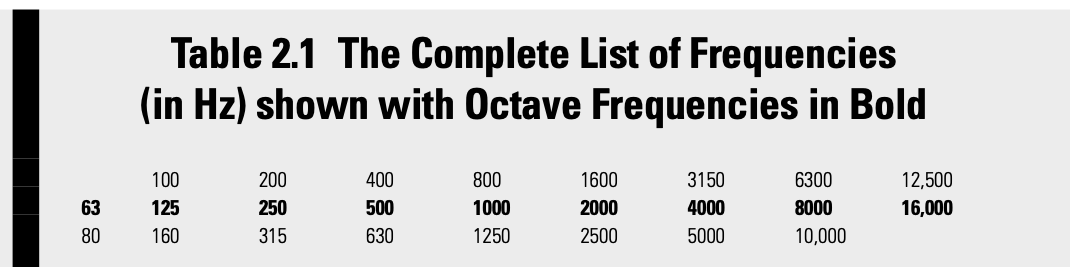
ISO Octave Frequencies (Cheat Sheet)
Managing Frequency Range
- Start narrow (e.g., 500 Hz–2 kHz)
- Expand outward one octave at a time
- Low end is hardest (room + playback limits)
- Headphones help, but have their own “curve”
Working with the EQ Practice Module
- Pink noise: learn the anchors
- Music: notice what changes (kick, snare, vocals, cymbals)
- Compare quickly: bypass vs EQ
- Keep notes: what does 500/1k/2k “feel like”?
Vowel Method (Octave Anchors)
- 250 Hz = [u] as in boot
- 500 Hz = [o] as in tow
- 1000 Hz = [a] as in father
- 2000 Hz = [e] as in bet
- 4000 Hz = [i] as in beet
Recommended recordings
- Anderson, Arild. (2004). “Straight” from The Triangle. ECM Records. (jazz piano trio)
- Blanchard, Terence. (2001). “On the Sunny Side of the Street” from Let’s Get Lost. Sony. (jazz with vocals)
- Earth, Wind & Fire. (1998). “September” from Greatest Hits. Sony. (R&B pop)
- Hellendaal, Pieter. (1991). “Concerto II—Presto” from 6 Concerti Grossi. Perf. The European Community Baroque Orchestra. Channel Classics. (Baroque orchestra)
- Le Concert des Nations. (2002). “Marche pour la cérémonie” from Soundtrack from the film Tous les matins du monde. Alia Vox Spain. (Baroque orchestra)
- Randall, Jon. (2005). Walking Among the Living. Epic/Sony BMG Music Entertainment. (roots music/bluegrass)
- Steely Dan. (2000). “Gaslighting Abbie” from Two Against Nature. Giant Records. (pop)
- The Police. (1983). “Every Breath You Take” from Synchronicity. A&M Records. (rock)