What is Loudness? Perception vs. Physics
- Loudness: How loud we feel or perceive a sound is.
- It’s related to physical sound pressure (amplitude), but it’s subjective.
- Our ears hear different frequencies (pitches) at different perceived loudness levels, even if their physical intensity is the same.
- Context matters! Our biases, expectations, and environment change how loud we think something is.
Loudness as a Recording Tool
- Producers and engineers actively shape loudness in recordings.
- They can make sounds seem louder or softer than they were in the original performance, creating unique sonic textures.
- When analyzing recordings, we try to focus on the sensation of loudness itself, separate from performance energy (intensity) or sound color (timbre).
- This requires focused, critical listening.
Loudness vs. Prominence: What’s the Difference?
- Loudness: How intense a sound feels subjectively.
- Prominence: What grabs your attention in the mix.
- Key Idea: The most prominent sound isn’t always the most intense (SPL)
- Example: A quiet but unexpected shaker entry might be more prominent than a constant loud pad sound.
- Attention directs perception
Prominence Example & Musical Dynamics
- Dynamics (in Music): More than volume — overall shifts in expression, energy, and intensity across loudness, timbre, articulation, and performance feel.
- Example: “Let It Be” (Spector mix) — the hi-hat at 0:53 is prominent due to surprise, not volume.
Why Measuring Perceived Loudness is Tricky
- Equal Loudness Contours: Same SPL sounds different across frequencies.
- Subjective Increments: No agreed-upon steps for “how much louder.”
- Confusion with SPL: dB is physical; loudness is perceptual. Not the same scale.
- No perfect meter: LUFS approximates it, but no method fully captures perception.
Measuring Loudness: Meet LUFS
- LUFS: Stands for Loudness Units Full Scale.
- It’s the modern, standardized way to measure perceived loudness in digital audio.
- Goal: To measure loudness more like humans actually hear it, unlike older methods (Peak, RMS dB).
- Why? Creates consistency across platforms (broadcast, streaming, etc.). Essential for mastering today.
Key LUFS Measurements
- Integrated LUFS: Average loudness over the entire track. (streaming targets)
- Short-Term LUFS: Rolling 3-second average. (section loudness)
- Momentary LUFS: Rolling 400ms average. (immediate peaks)
- True Peak (dBTP): Highest peak, including between samples. (prevents clipping)
Putting Loudness Meters to Use
- Listen actively while watching a LUFS meter (routed through software like Reaper).
- Compare the LUFS readings of different songs (e.g., older vs. newer tracks).
- Use tools like MLoudnessAnalyzer to visualize loudness over time.
- This helps develop your ear for perceived loudness and understand how tracks meet delivery standards.
Key Loudness Concepts in a Mix
- Loudness Balance (Musical Balance): How loud individual instruments/sounds are relative to each other. Crucial for the mix’s character.
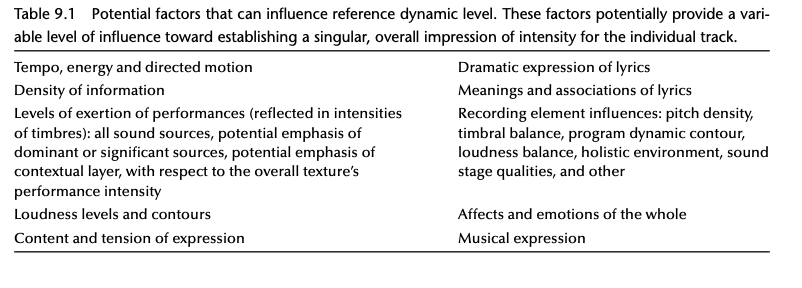
- Reference Dynamic Level (RDL): The track’s overall impression of intensity or energy level. A stable reference point.
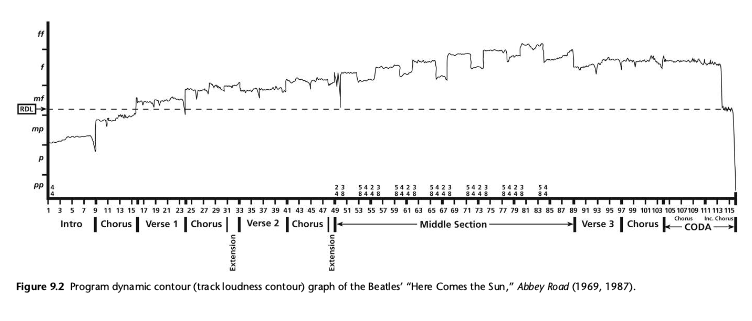
- Track Loudness Contour: The shape of the overall loudness (combination of all sounds) as it changes throughout the entire track.
Understanding the RDL (Reference Dynamic Level)
- Think of it as the track’s ‘home base’ or central intensity level.
- It’s a holistic feeling reflecting the overall energy, performance force, emotion, and tempo.
- We use this felt RDL as a reference point to judge how loud or soft other parts of the track feel in context.
- Related to the idea of “Crystallized Form” - the track’s core essence felt all at once.
RDL
The Track Loudness Contour
- The overall loudness journey of the entire track, moment by moment.
- It’s the combined loudness of all instruments and sounds mixed together.
- Imagine a single master volume meter needle dancing throughout the song – that’s the contour.
- This changing shape adds drama, movement, and structure to the music.
Overall Loudness Level of the Track
Loudness Shapes and Structure
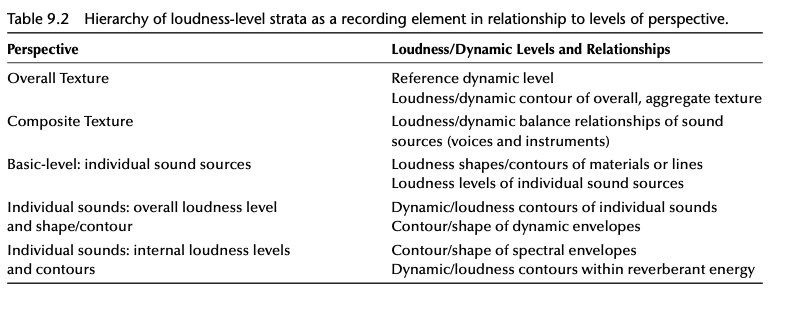
- Loudness exists at different levels: the whole track, sections, individual sounds.
- The shape of the track loudness contour is structurally important!
- It can highlight sections (verse vs. chorus), build tension, and provide release.
- Example: “Here Comes the Sun” uses loudness changes to define its form.
“Here Comes the Sun” - Loudness Contour Example
Beyond Loudness: The Confluence of Domains
A recorded track isn’t just sound – it’s a blend of three key areas:
- Music: Notes, rhythms, harmony, melody, structure.
- Lyrics: Words, meaning, story, poetic devices.
- Recording: Mic choices, effects (reverb, delay), mixing decisions (panning, EQ, loudness balance), performance capture.
These domains merge and interact to create the final overall sound quality and meaning.
Timbre: The Glue Between Domains
- Timbre: The unique ‘sound color’ or quality of an instrument or voice. What makes a trumpet sound different from a violin playing the same note at the same loudness.
- Timbre acts like glue, binding elements from Music, Lyrics, and Recording together through the actual sound.
- It’s not just one thing – it emerges from the blend (a multi-domain gestalt).
- The range of frequencies a sound occupies (pitch density) and the loudness balance of its internal parts contribute to its overall timbre.
Deep Listening: Hearing More Detail
- Deep Listening: Paying extremely close, focused attention to sound.
- It means hearing the subtle details within sounds – the texture of a voice, the decay of a reverb, the attack of a drum.
- Different from casual, everyday listening. Requires intention.
- Crucial for noticing the nuances of recording choices and how different elements interact.
- Inspired by composers like Pauline Oliveros and Pierre Schaeffer.
Why Listen Deeply?
- Helps you truly understand how loudness works alongside timbre, space, and performance within the mix.
- Reveals how the Music, Lyrics, and Recording domains blend and influence each other.
- Allows you to better perceive the track’s overall essence or “Crystallized Form”.
- Unlocks a richer, more insightful appreciation of recorded music by revealing hidden sonic layers.