
Interactive Machine Learning (IML) for Audio
Exploring AI-Driven Sound and Gesture Interaction
What is Interactive Machine Learning (IML)?
- Definition: IML is a form of machine learning where users train models in real time through iterative feedback.
- Why It Matters?
- Unlike traditional ML, IML allows artists, musicians, and designers to create custom AI models quickly.
IML Principles
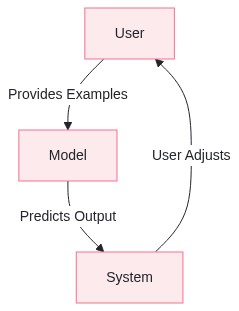
- Definition: IML involves a cyclical process where users iteratively train, evaluate, and refine models based on immediate feedback.
- Human-in-the-Loop: Emphasizes collaboration between humans and machines to improve learning efficiency and model performance.
- Applications in Audio: Real-time sound synthesis, adaptive musical interfaces, and responsive audio effects.
Why Use IML in Music and Audio?
- Creative Possibilities:
- Allows performers to control sounds dynamically using gestures or sensors.
- Transforms real-world movements into sound interactions.
- Enables composers and sound designers to experiment with generative AI tools.
Meet Wekinator – A Tool for IML in Music
- What is Wekinator?
- A free, real-time machine learning software for musicians, artists, and developers.
- Created by Rebecca Fiebrink to make AI more accessible for creative applications.
- How does it work?
- Inputs: (MIDI controllers, webcams, sensors).
- User trains the model with examples.
- Outputs: (Sound changes, MIDI data, visuals).
Resource: Wekinator Website
Wekinator in Action – Applications in Music
- Live Performance: Control reverb and sound parameters using hand motion.
- Instrument Augmentation: Smart bow tracking for expressive cello performance.
- Sound Art & Installations: Interactive sonic experiences.
Gesture Recognition & Sound Interaction
- How does gesture-based control work?
- Motion sensors (IMU, webcam, Leap Motion, Kinect) capture movement.
- Machine learning classifies gestures (e.g., “fast motion = loud sound”).
- Outputs control sound synthesis in real time.
Kinect x Wekinator x Touchdesigner Audiovisual Demonstration
From the Waters (2012)
Performed by: PLOrk
Composer: Anne Hege
Tools Used: GameTrak Tether Controllers, ChucK Programming Language, and the Wekinator
Michelle Nagai — MARtLET
Laetitia Sonami playing and discussing the Spring Spyre in her NIME 2014 Keynote
The Snakinator: A Bio-Inspired Interactive Music System
Sonification – Data into Sound
- What is sonification?
- The process of turning data into sound for artistic or scientific purposes.
- Examples:
- Genomic Data Sonification – Sonifying DNA sequences.
- Biodata Sonification – Transforming brainwaves or environmental sounds into music.