Spotting and Cueing Foley
This lesson follows Vanessa Theme Ament, The Foley Grail, 3rd ed., ch. 4 and 5.
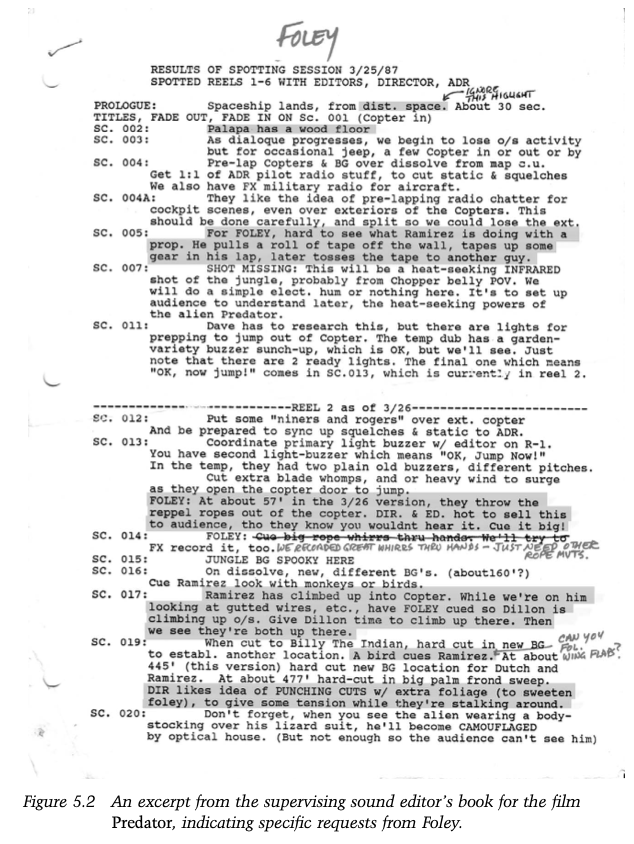
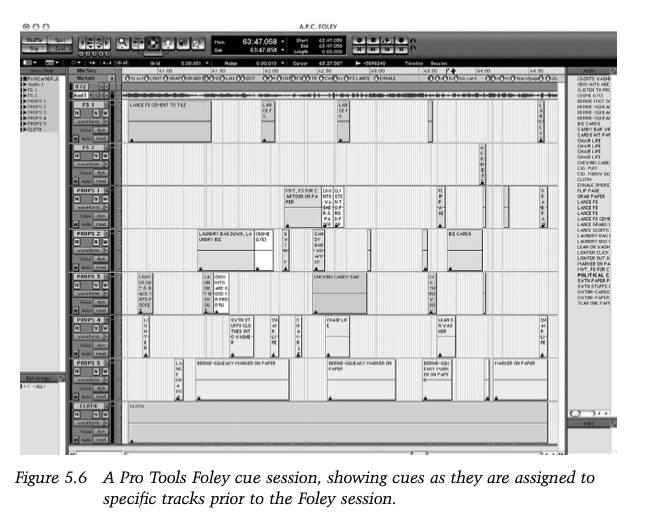
Cue with a breath
- Play the lead-in so the artist can anticipate the action.
- Place the cue item’s left edge at the exact sync point.
- Keep continuous movement together across picture cuts.
Two stories worth knowing
- The Turning Point: Jerry Trent recreated Baryshnikov’s dance sounds, even while sitting down.
- The Godfather Part II: Murch and Berger walked real marble stairs, keeping time with a flashing metronome.
Cuing process
- Watch the scene several times before cueing.
- Main characters first: one track per character and surface.
- Background characters next: label their direction.
- Props last: group similar materials together.
Set up the session
- 48 kHz / 24-bit WAV; Time timebase.
- Match the video frame rate; show a timecode ruler.
- Lock picture at 10 seconds; silence its audio.
- Save the project and media in one folder.
Three beeps, then perform
- Hear three evenly spaced beeps.
- Enter on the silent fourth beat.
- Our practice: beeps at 7, 8, 9 seconds; enter at 10.
- Use headphones; mute beeps before mixing.
Spot A Quiet Place together
- Identify actions and choose props for the scene.
- Label each cue and place its left edge at the exact sync point.
- Plan separate recording passes by material.
- Rehearse one entrance with the three beeps.