Stereo Reproduction
Two-Channel (2-0) Stereo
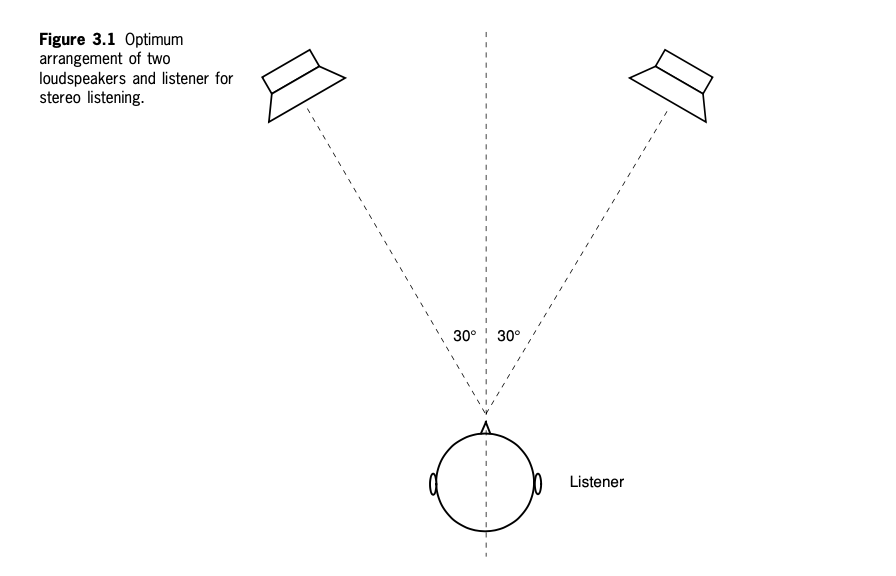
The Stereo Listening Triangle
- Equilateral triangle, speakers at ±30°
- Sit at the apex, ears at tweeter height
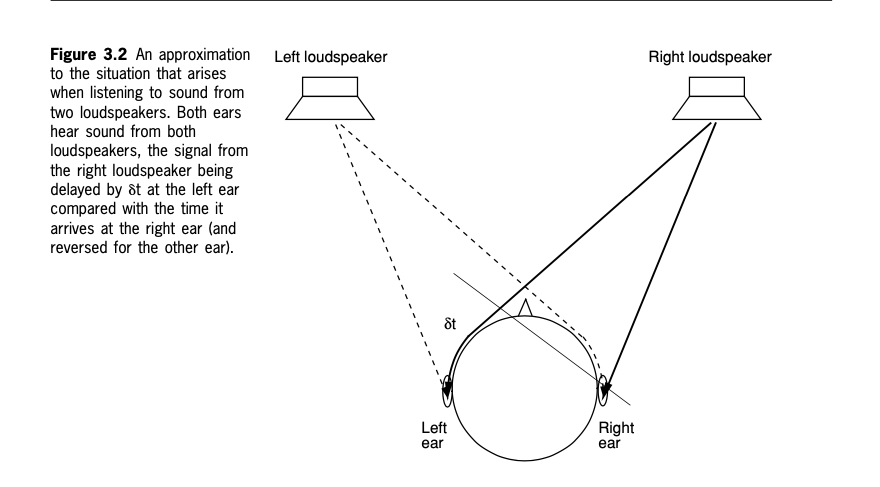
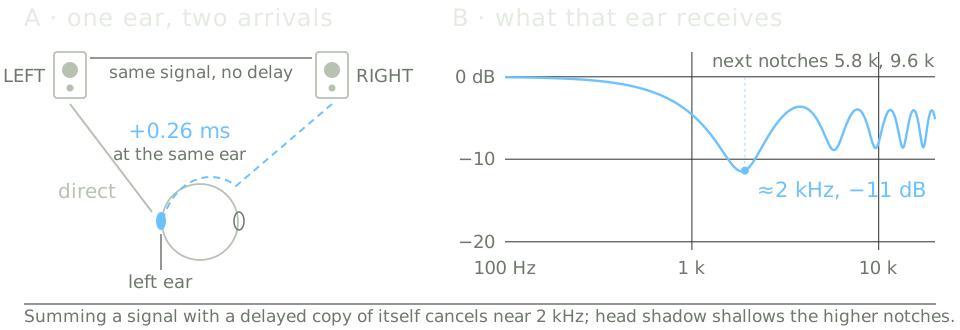
Summing Localization
- Each ear hears both speakers
- The far one arrives about 0.26 ms later
Real vs. Virtual Source
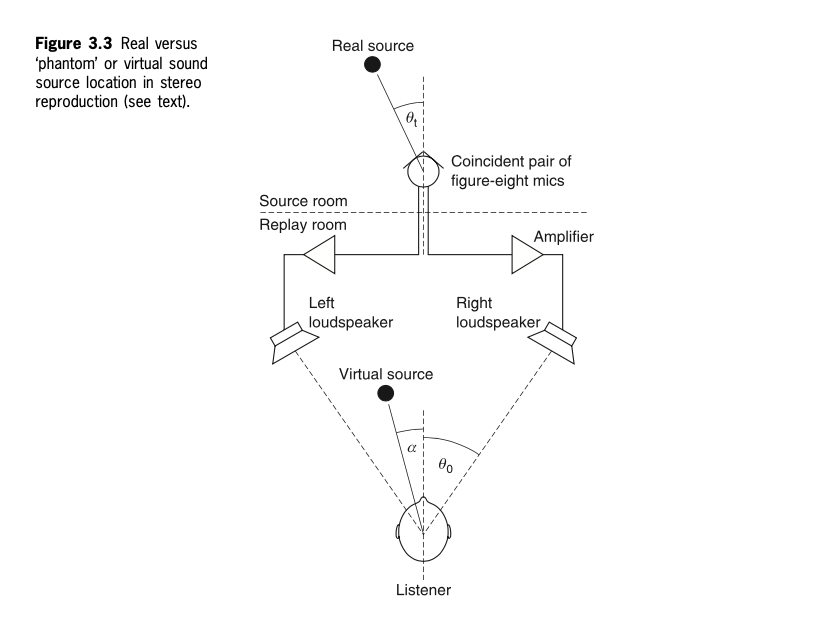
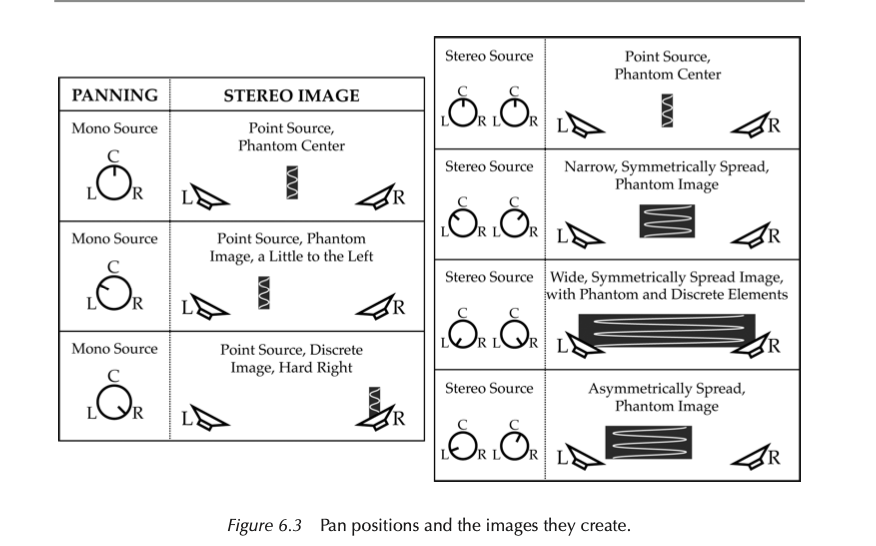
Phantom and Discrete Images
- Discrete (hard-panned, or a real center speaker): clearer, more precise, smaller
- Phantom: larger, less focused, slightly colored
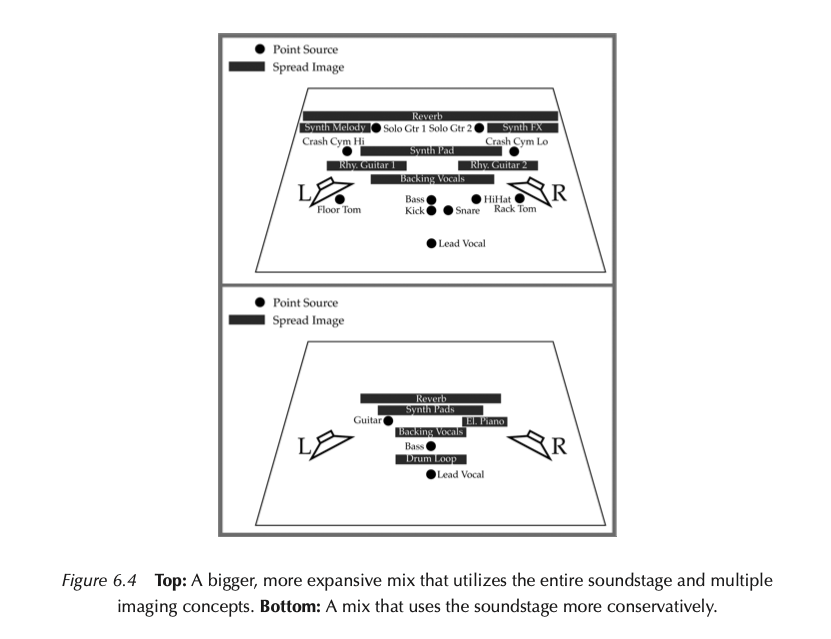
The Stereo Soundstage
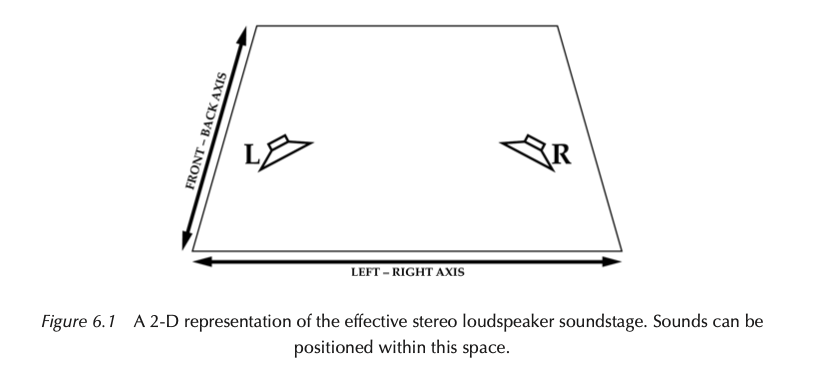
Image Width
- Mono point sources: centered, off-center, or hard to one side
- Spread images: narrow or wide, symmetric or asymmetric
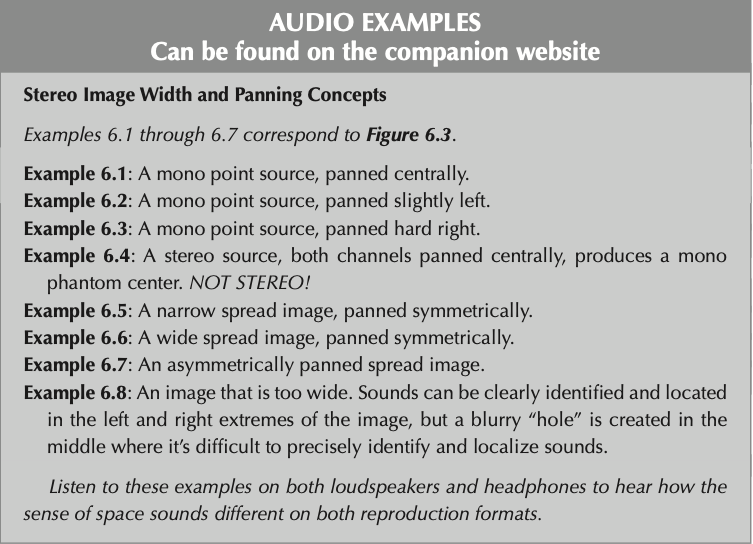
Listen: panning
Point source or spread image?
Beyond the Loudspeakers
- Decorrelation widens: different L and R signals, from short delays, chorus, or stereo reverb
- Polarity inversion widens too, but cancels in mono
- Always check the mono fold-down
Depth in the Stereo Field
You already know the distance cues. Now place them on the stage.
- Direct-to-reverberant ratio does most of the work
- Level sets apparent distance within a section
- High-frequency rolloff supports the illusion
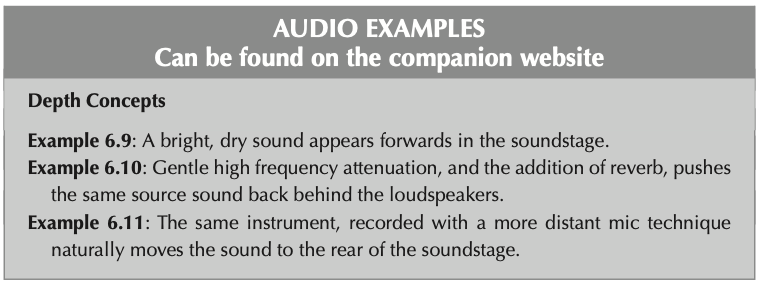
Listen: depth
Same source, three depths. What changed between 6.9 and 6.10?
Static and Dynamic Panning
- Static: the position does not change through the mix
- Dynamic: fly-bys, auto-panning, ping-pong and question/answer moves
Listen: static vs. dynamic
Track one moving element in 6.13. Does the movement serve the mix or distract from it?
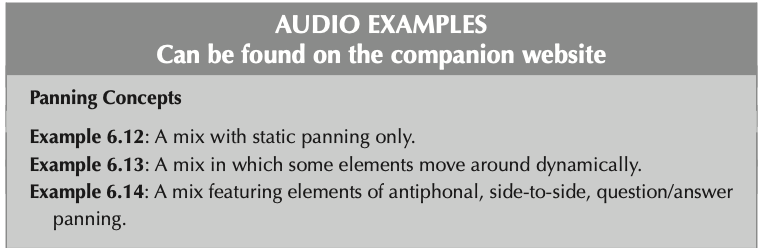
Image Symmetry
- Balance weight on the left against weight on the right
- Spread percussion across the field
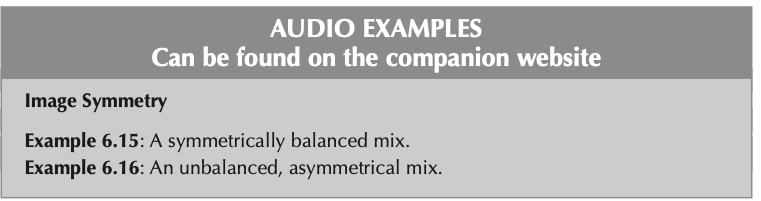
Compare 6.15 and 6.16.
Possible Stereo Image