Stereo microphone techniques
Today’s goals
- Predict how angle and spacing affect the stereo image.
- Choose an array for a source and room, and explain the tradeoff.
- Decode M/S and check a stereo recording in mono.
Microphone arrays
- Two microphones can capture a stereo scene.
- Matched pairs help XY, Blumlein, ORTF and AB stay balanced.
- Measure capsule spacing and the angle between microphones.
- M/S uses complementary patterns. Decca Tree uses three mics.
Recall: stereo cues
What changes between channels when we separate the capsules?
XY coincident pair
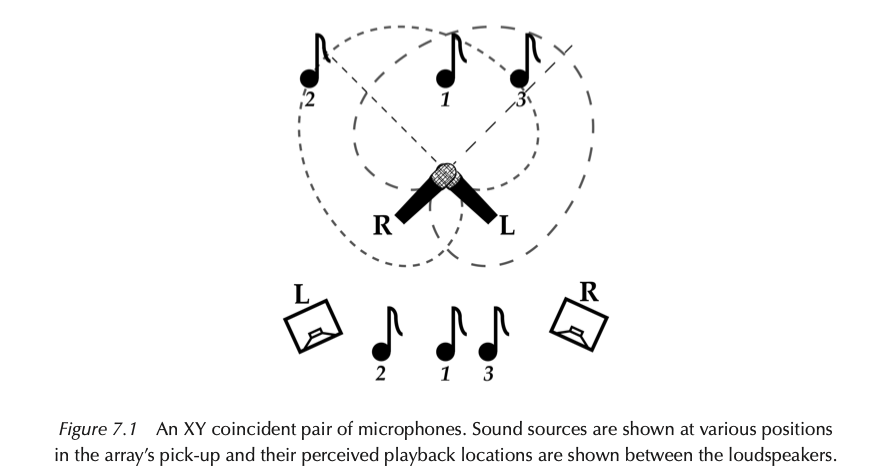
- Capsules sit nearly together, minimizing arrival-time differences.
- Angled directional patterns create level differences between channels.
XY: width and mono
- Capsule angle and polar pattern shape the image width.
- XY often gives a compact image and reliable mono playback.
- Off-axis tone depends on the microphones and source position.
What would you change if the image were too narrow?
Listen: XY
Where do the drums sit? Which image is wider?
Mic It! companion audio, Chapter 7
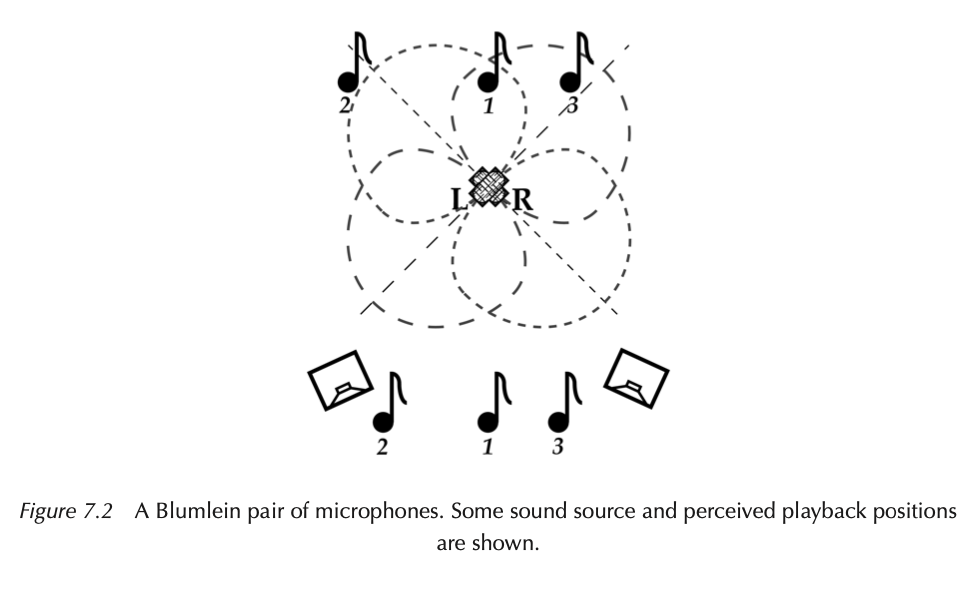
Blumlein pair
Two figure-eight mics, coincident and crossed at 90°.
Listen: Blumlein
How does the room sound compare with XY?
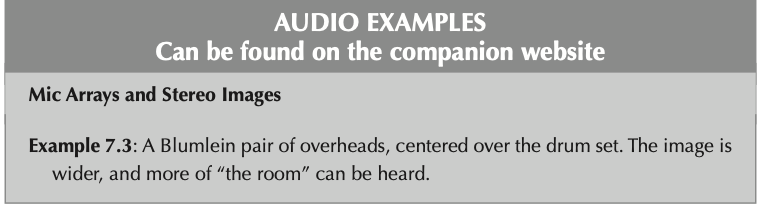
Mic It! companion audio, Chapter 7
Near-coincident pairs
Spacing adds arrival-time differences to level differences.
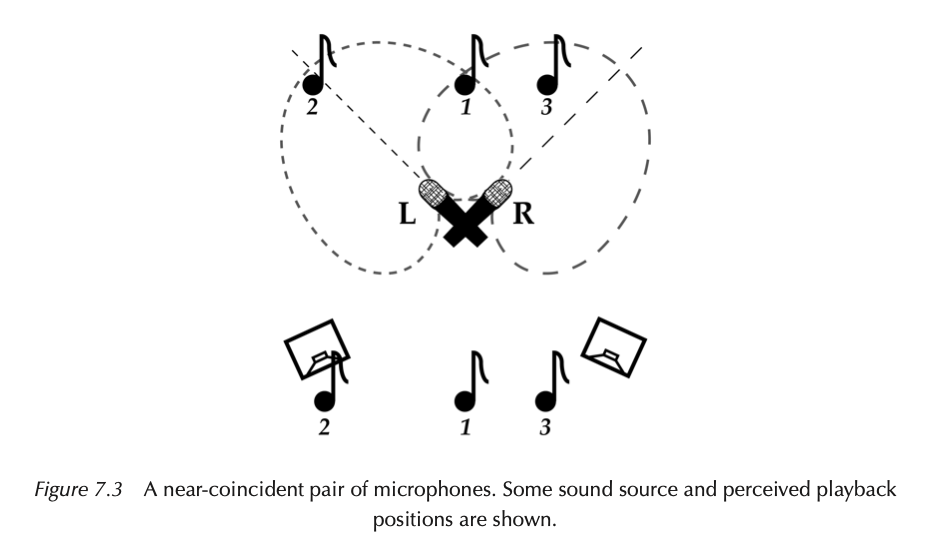
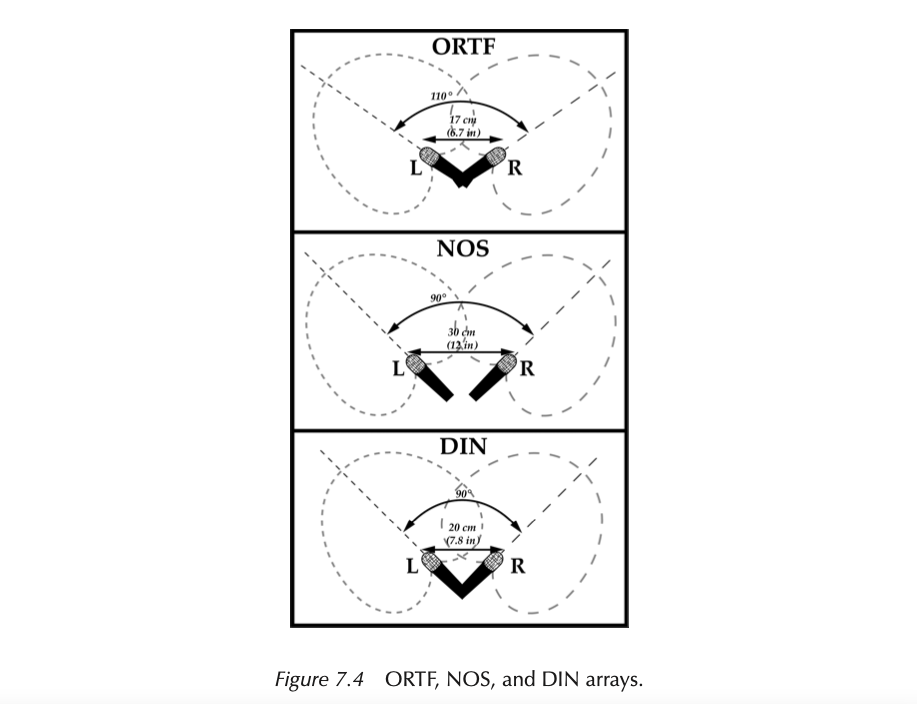
ORTF, NOS and DIN
ORTF: 17 cm / 110° · NOS: 30 cm / 90° · DIN: 20 cm / 90°
Listen: ORTF, NOS and DIN
Which has the clearest center? What changes in width?
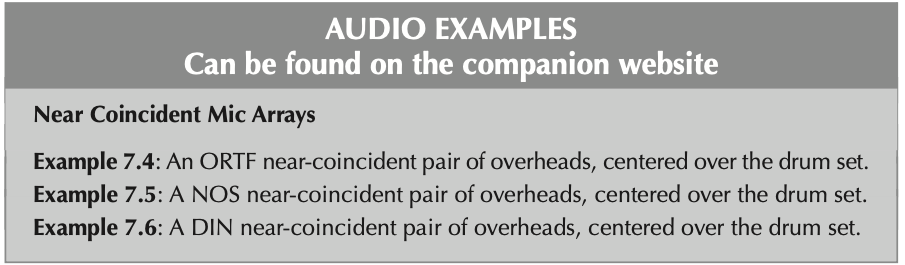
Mic It! companion audio, Chapter 7
Spaced pair, AB
Usually two omnis. Spacing creates arrival-time differences.
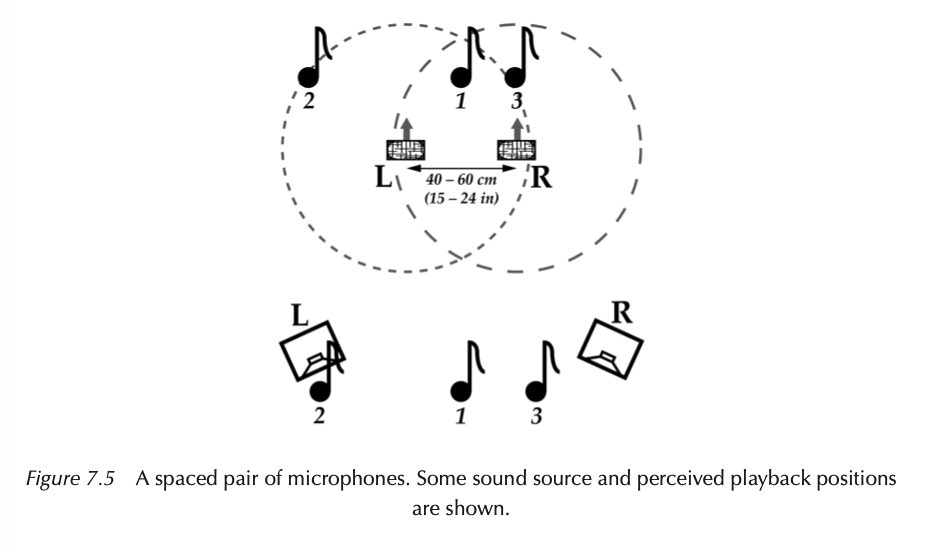
Listen: Spaced pair
Does the center stay focused as the image widens?
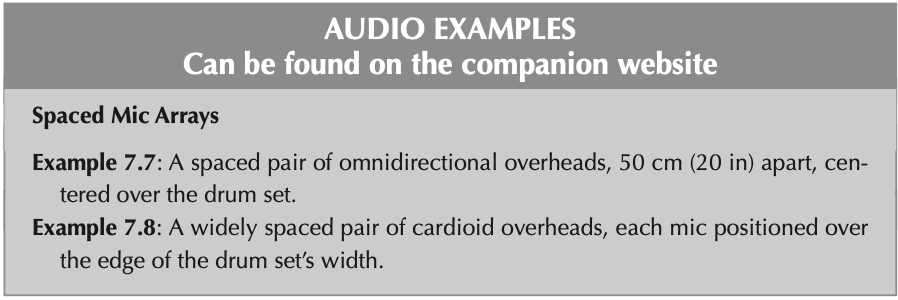
Mic It! companion audio, Chapter 7
Mid-side, M/S
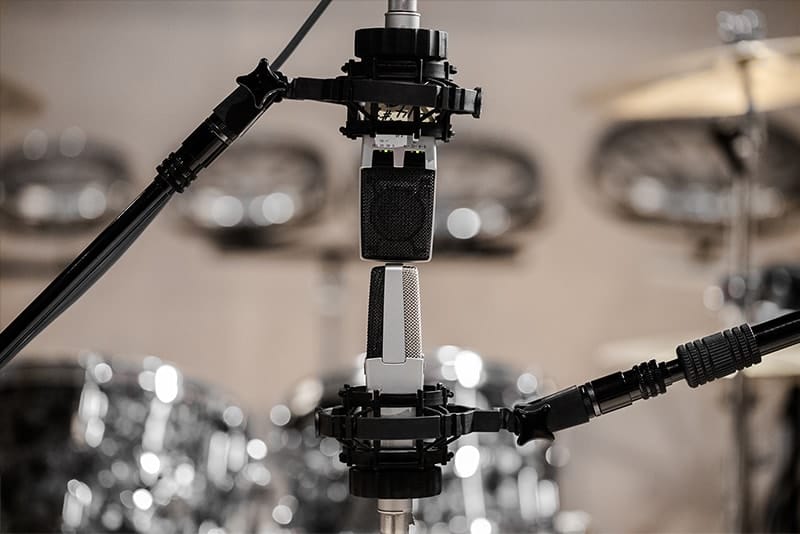
Mid faces forward. A figure-eight Side mic faces sideways.
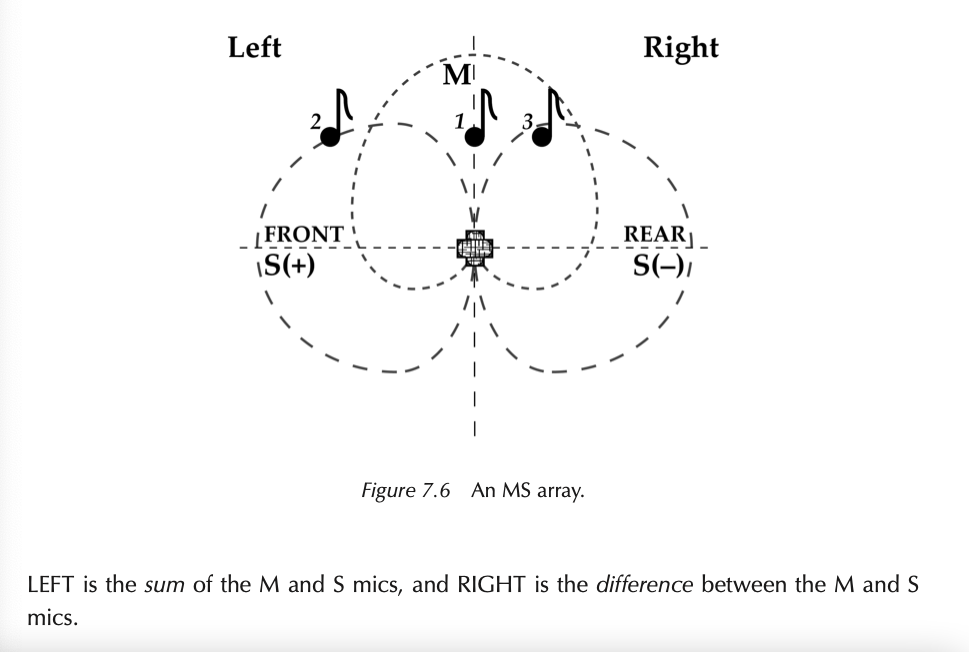
M/S capsule placement
M/S decoding
Left = Mid + Side
Right = Mid − Side
- Send Mid equally to left and right.
- Add Side on the left and polarity-inverted Side on the right.
- Raise both Side feeds equally to increase width.
REAPER routing reference: M/S Mastery
Listen: M/S
How do source width and room sound differ?
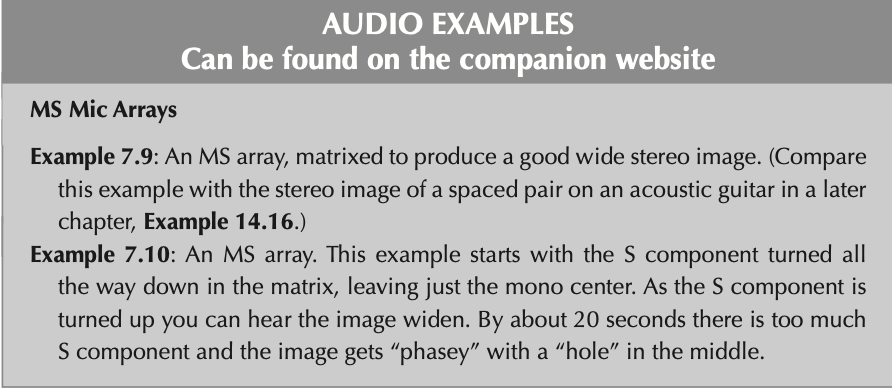
Mic It! companion audio, Chapter 7
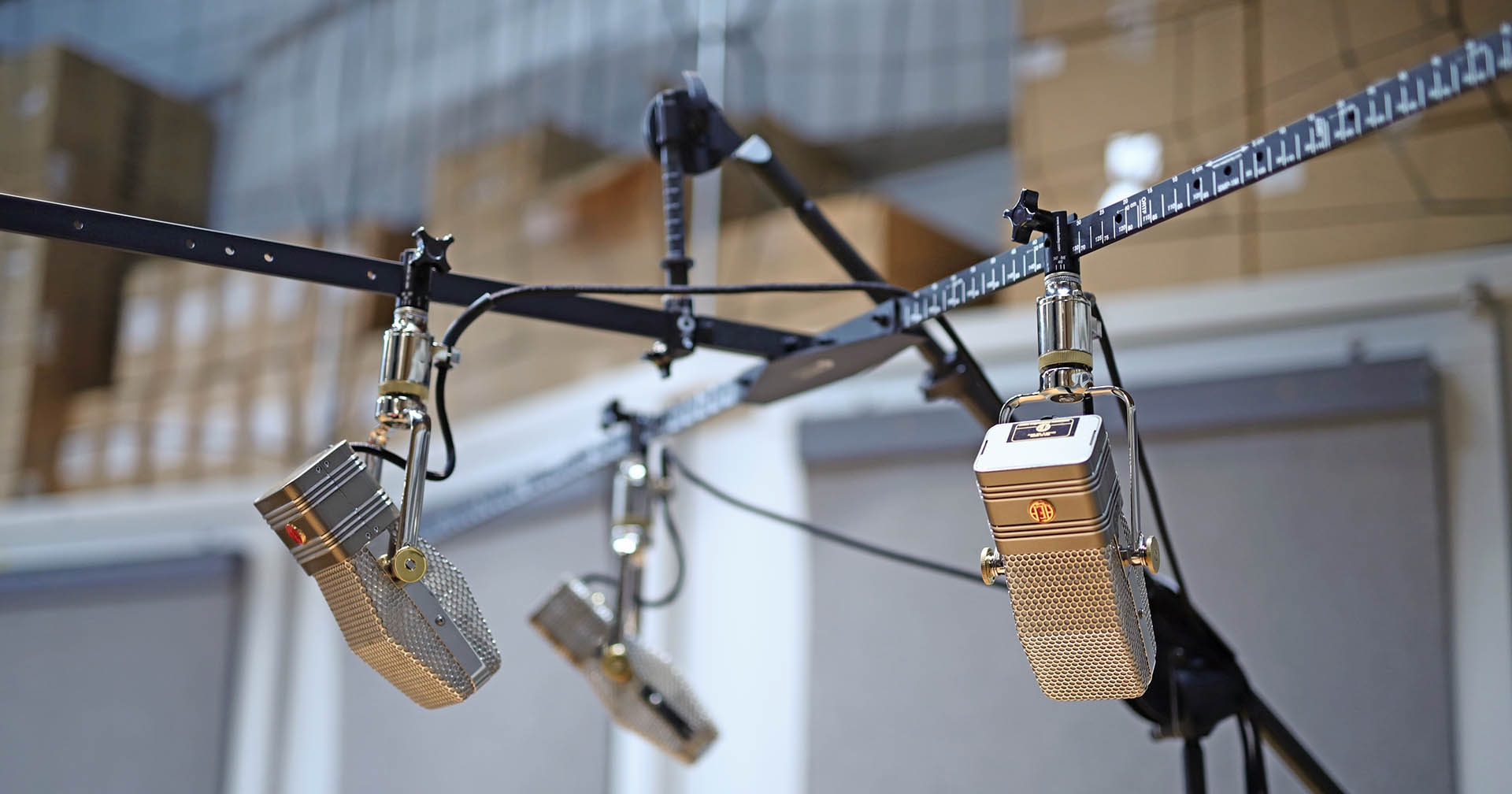
Decca Tree
Three spaced omnis feed left, center and right positions.
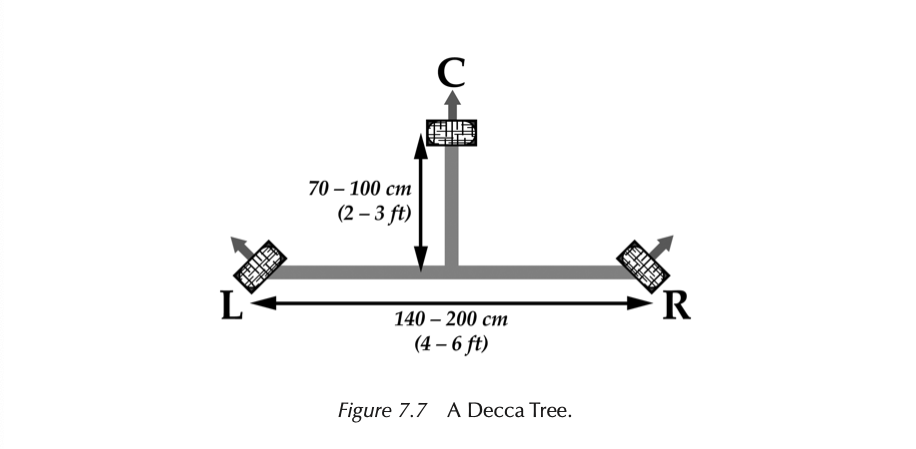
Decca Tree in practice
Angle, spacing and image width
Compare the arrays. How do angle and spacing change the stereo image?
Interactive stereo-array visualization
Pair task: choose an array
Record an acoustic duo in a small, reflective room. The mix also needs to work in mono.
- Choose an array and sketch its placement.
- Explain one advantage and one risk.
- Name what you would listen for in a test take.
Exit check
- Why can capsule spacing change the tone of a mono sum?
- What remains when correctly decoded M/S is summed to mono?
- Your recording has a weak center. What would you try first?