Introduction to Spatial Audio
Today: from hearing space to reproducing it
- Identify the cues that reveal width, height, and distance.
- Explain how distance, directivity, and reflections change a recording.
- Compare channel-based, object-based, and scene-based audio.
The Spatial Dimension in Natural Sound
- Width: left to right placement
- Height: perceived vertical position
- Depth: perceived distance from the listener
Outdoor sound fields
- Diffuse ambience arrives from many directions.
- Discrete events, such as birds or footsteps, remain localizable.
- With few nearby boundaries, reflections are usually weak or delayed.
Indoor sound fields
- Direct sound carries the clearest location cue.
- Early reflections reveal nearby boundaries.
- Late reverberation suggests the room’s size and absorption.
Listening 1: What space is this?
Listening 2: What space is this?
Listening 3: What space is this?
Listening 4: What space is this?
Listening 5: What space is this?
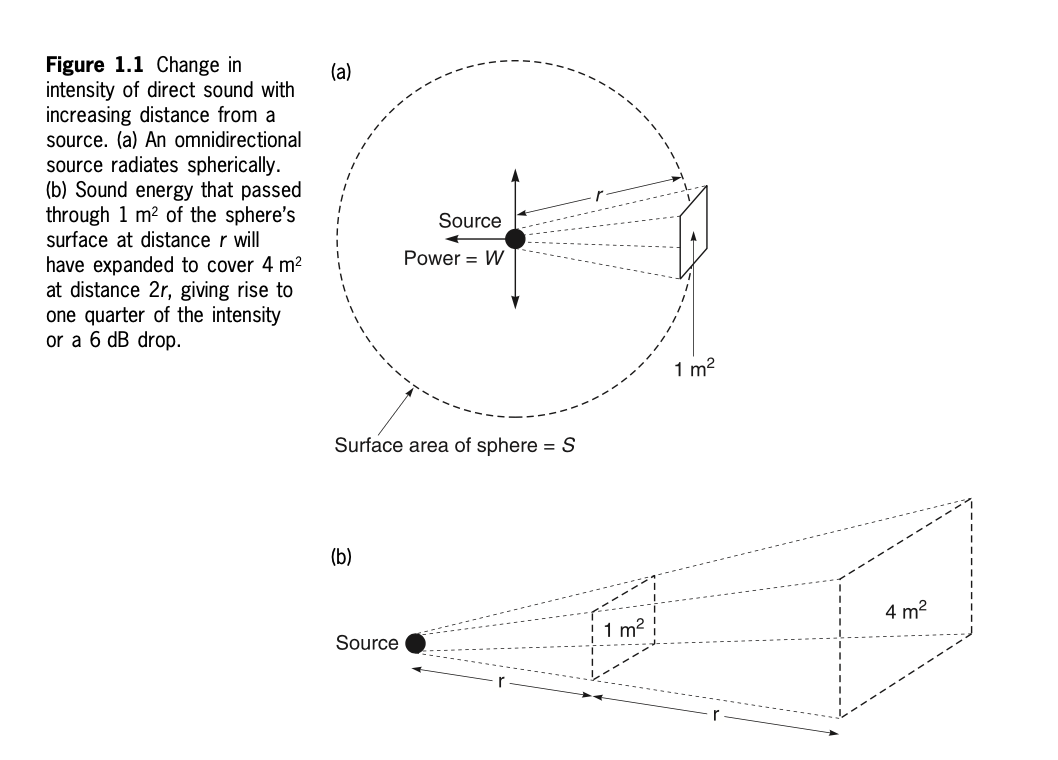
Level loss in a free field
- Each doubling of distance reduces sound-pressure level by about 6 dB.
- 1 m to 2 m to 4 m is two doublings, for a total drop of about 12 dB.
Sound directivity
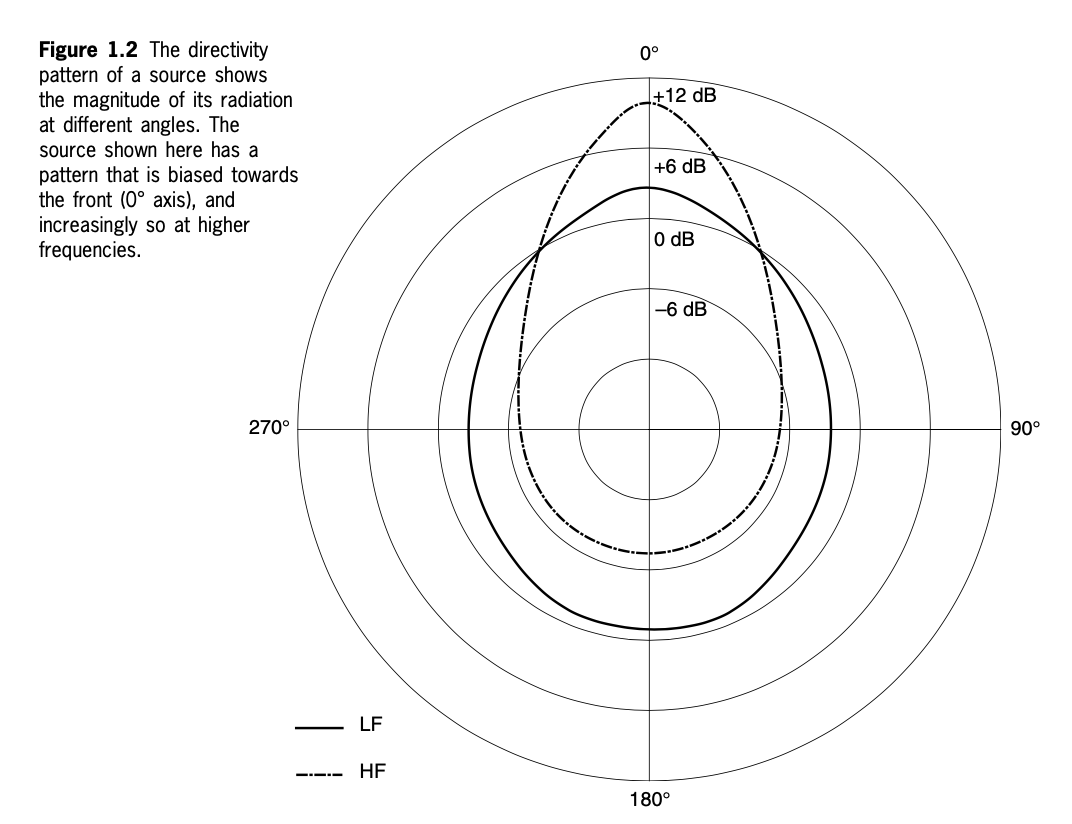
Reading a loudspeaker directivity plot
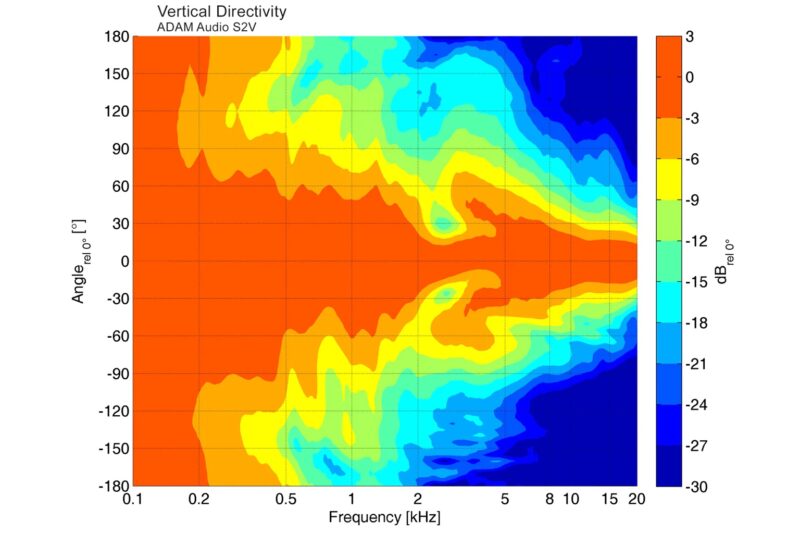
Adam Audio Speaker Directivity Chart
Tuba directivity
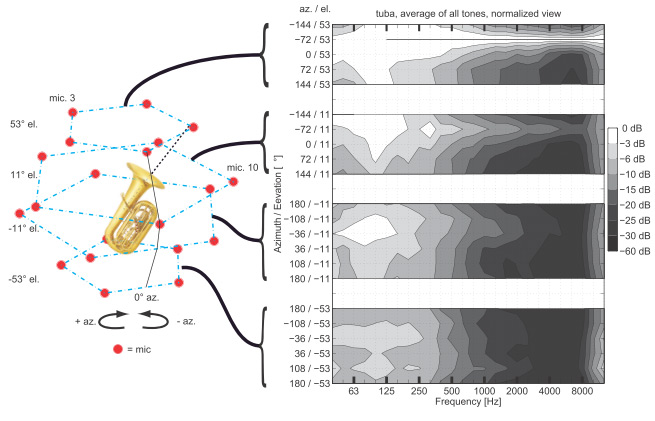
Measuring directivity
Q = on-axis intensity / average intensityDI = 10 log10(Q)- An omnidirectional source has Q = 1 and DI = 0 dB. Larger values indicate narrower radiation.
Sources in reflective spaces
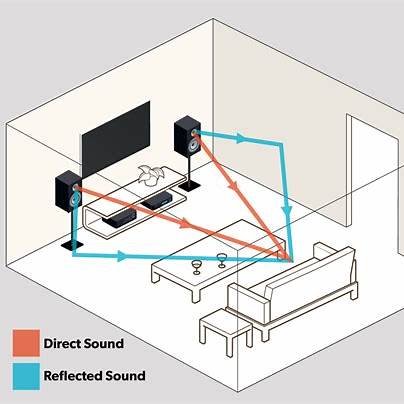
Critical distance
- Direct sound falls about 6 dB per distance doubling. The reverberant field varies much less with source distance.
- At critical distance, direct and reverberant sound have equal levels.
Dc ≈ 0.057√(QV / RT60) meters
Critical distance and microphone placement
- Critical distance changes with frequency because source directivity and room absorption also change.
- In one tracking room, it measured 1.73 m at 63 Hz and 3.2 m at 8 kHz.
- A microphone at 2 m can be inside the direct field for treble but outside it for bass.
Boundary loading
- At low frequencies, one nearby boundary can add about 3 dB of output.
- Two boundaries can add about 6 dB. A three-boundary corner can add about 9 dB.
- Subwoofer placement uses this gain, but the room’s modes and frequency response still require measurement.
Three ways to represent spatial audio
- Channel-based: signals are assigned to a fixed loudspeaker layout.
- Object-based: audio carries position metadata for a renderer.
- Scene-based: a sound field is encoded independently of the playback layout.
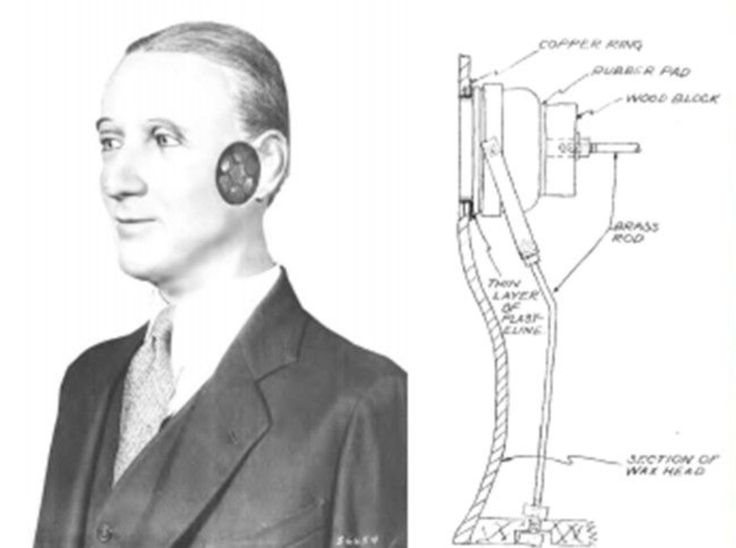
Binaural recording
Ambisonics
- Scene-based representation of a full-sphere sound field
- Spherical-harmonic channels describe the field, not individual speakers
- Decoded for a loudspeaker array or binaural playback
The ITU 5.1 reference layout
- Center: 0°
- Left and right: ±30°
- Surrounds: 100° to 120°
Exit ticket: trace one spatial choice
- Physics: what changed in the sound field?
- Perception: which cue tells the listener about that change?
- Reproduction: which recording or playback method preserves it?
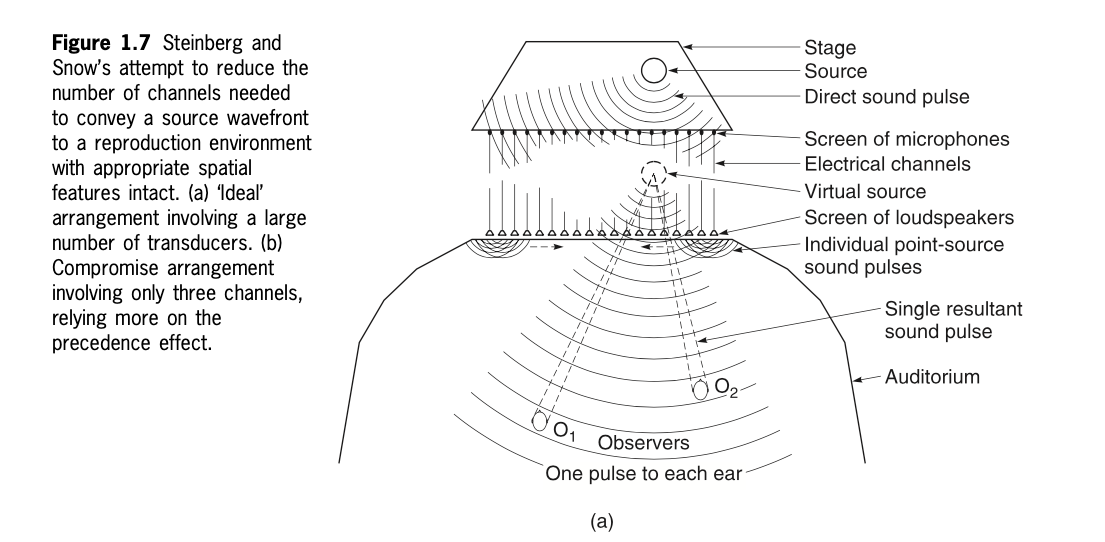
Appendix: early spatial-audio milestones
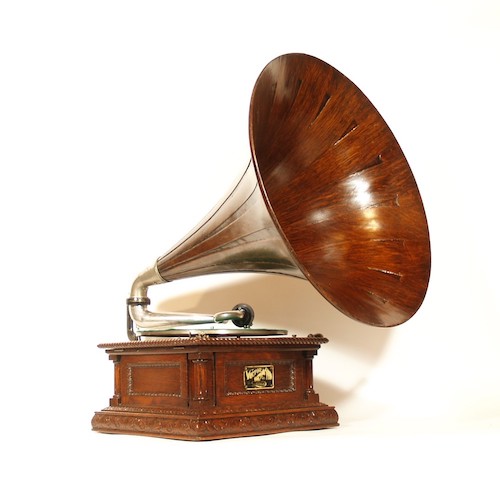
Early sound reproduction
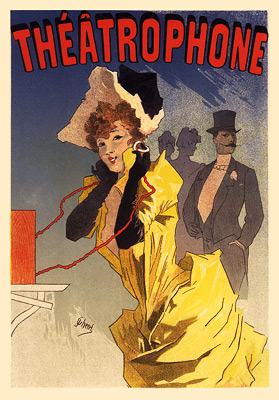
The Théâtrophone: early stereo transmission
Bell Labs in the 1930s