Electronic sound production – synthesis
Case study: recreating a trumpet
- Goal
- Recreate the gist of a trumpet tone without sampling one.
- High level approach
- Identify partials (harmonics) in a recorded trumpet note.
- Use several oscillators to match partial frequencies and relative levels.
- Introduce slight detune and amplitude modulation for realism.
Analog days: synthesizers in the 1960s and 1970s
- Names to know
- Robert Moog, Donald Buchla, and contemporaries
- Key characteristics
- Analog
- Modular
- Voltage controlled
East Coast vs West Coast synthesis
- East Coast (Moog tradition)
- Start bright, then subtract using filters.
- Common patch: VCO → VCF → VCA with ADSR envelopes.
- West Coast (Buchla tradition)
- Start simple, then add complexity with waveshaping and modulation.
- Common patch: complex oscillator → waveshaper/wavefolder → low-pass gate.
Moog - show by Wendy Carlos
Buchla 200e
Yamaha DX7
Basic synthesis model
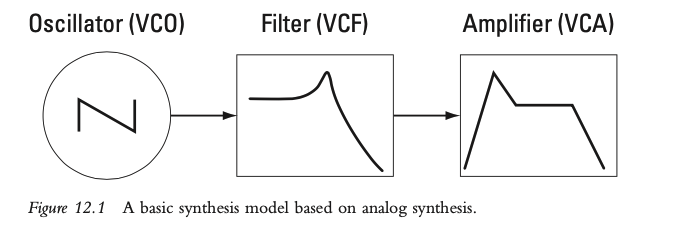
Pitch and timbre source: the oscillator
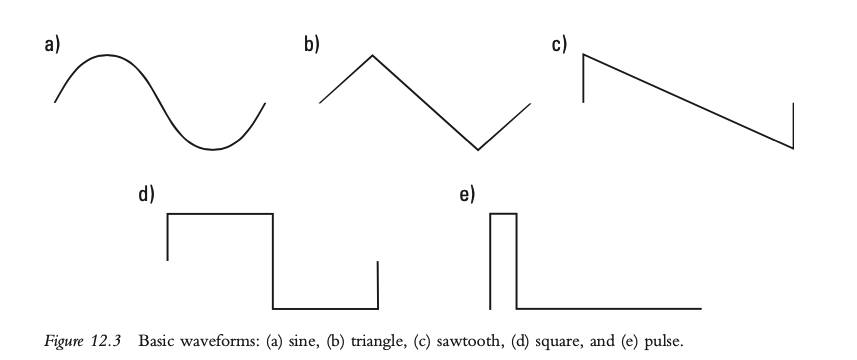
Basic Waveforms
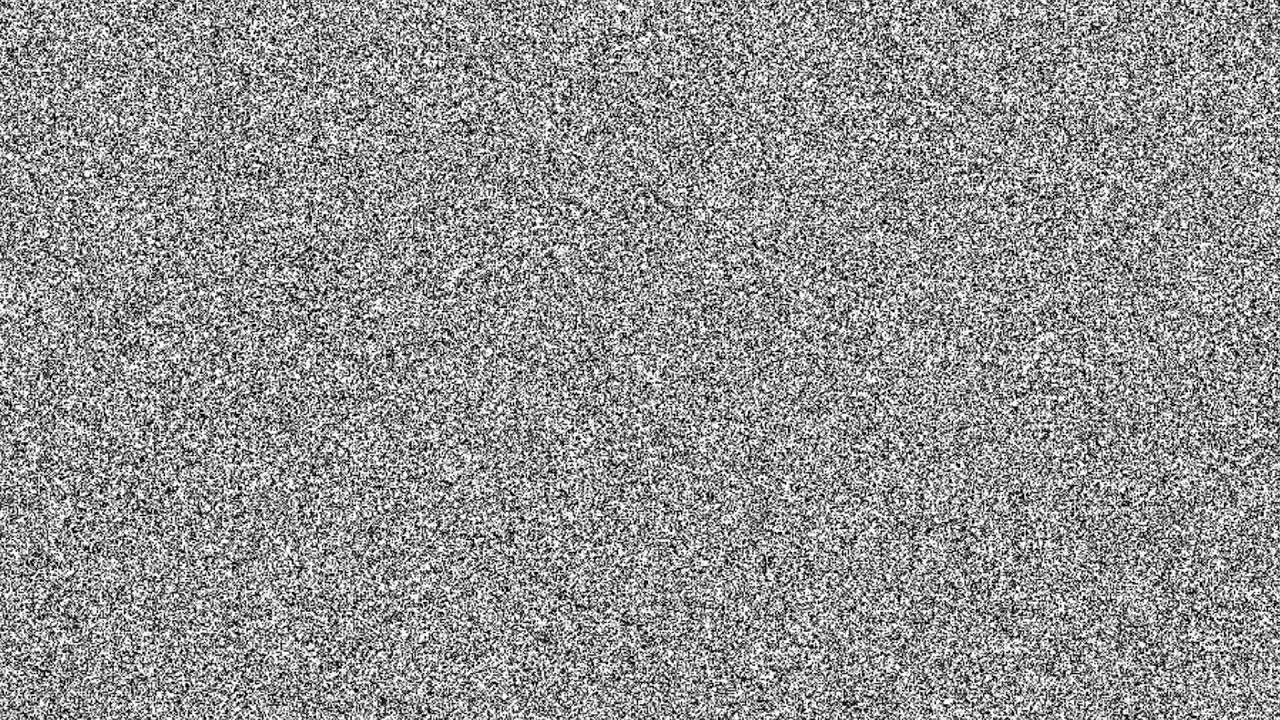
Noise
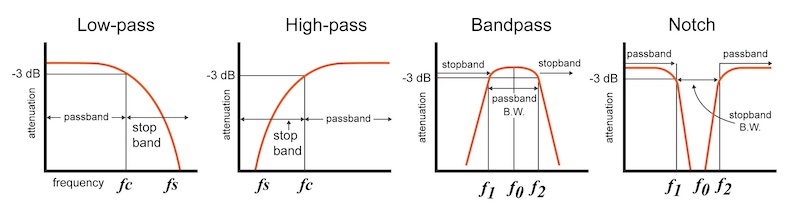
Timbre modification: the filter
Loudness modification: the amplifier
Applying articulation with an envelope
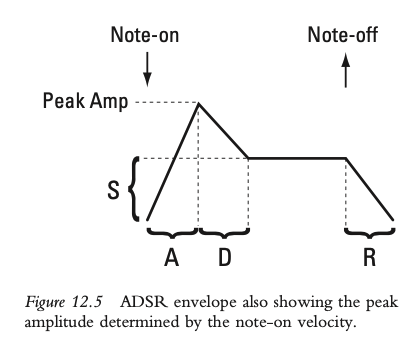
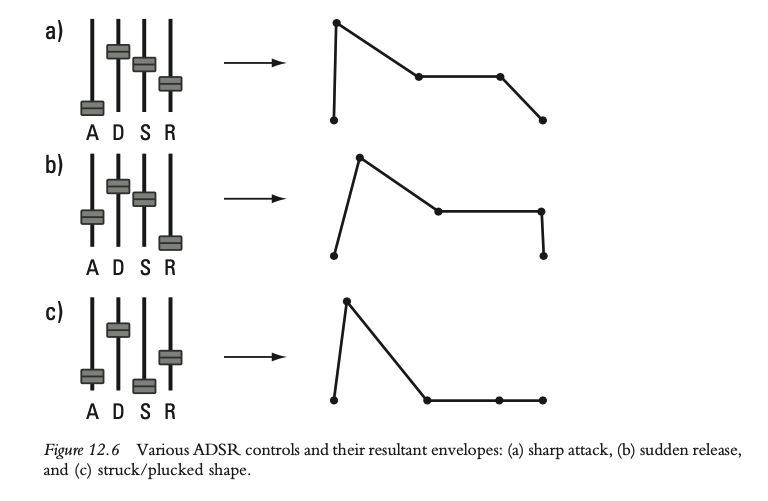
Modulation sources and destinations
Methods of synthesis at a glance
- Subtractive
- Additive
- FM and phase modulation
- Wavetable
- Granular
- Physical modeling
- Sample‑based and hybrid
Experiment with the Synth Playground