Splices and Edit Detection
Chapter 5: Authenticity Assessment
What is Authenticity?
- Is the recording complete, unaltered, and consistent with the stated circumstances?
- Not finding evidence of tampering does not guarantee authenticity
- A skilled adversary could conceivably create a forgery that defies detection
Historic Context: Analog Magnetic Tape
- Primary medium for audio evidence until the early 2000s
- Three heads: erase, record, playback
- AC bias signal linearizes the recording process
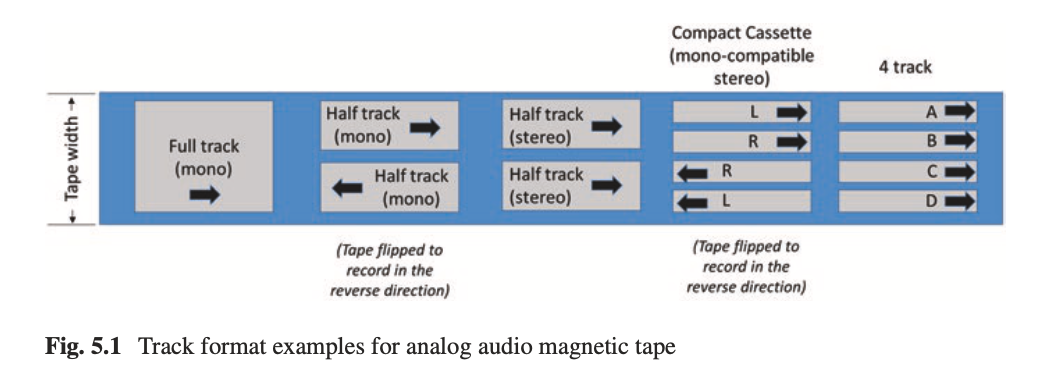
- Multiple track configurations possible
Analog Tape Track Formats
Physical Inspection of Tape
- Look for splice edits: physically cut tape rejoined with adhesive
- Inspect cassette housing, reels, and related material
- Check manufacturing serial numbers and batch designations
- Verify tape age matches the reported recording date
- Inspect the recorder itself if available
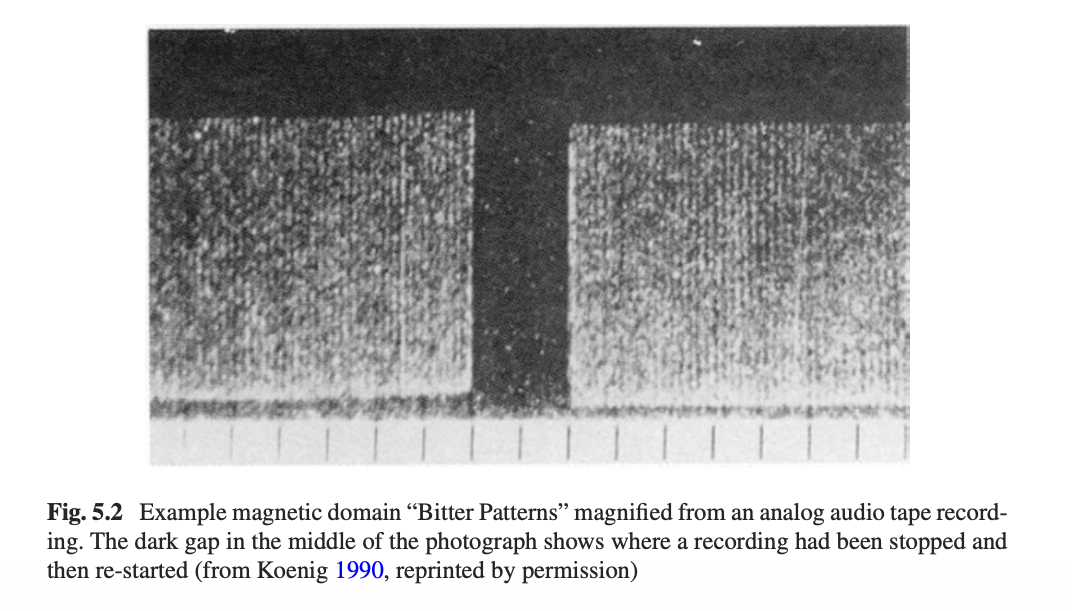
Magnetic Development: Bitter Patterns
What Examiners Look For on Tape
- Single start-up transient at the beginning
- No unexpected start-stop sequences or erasures
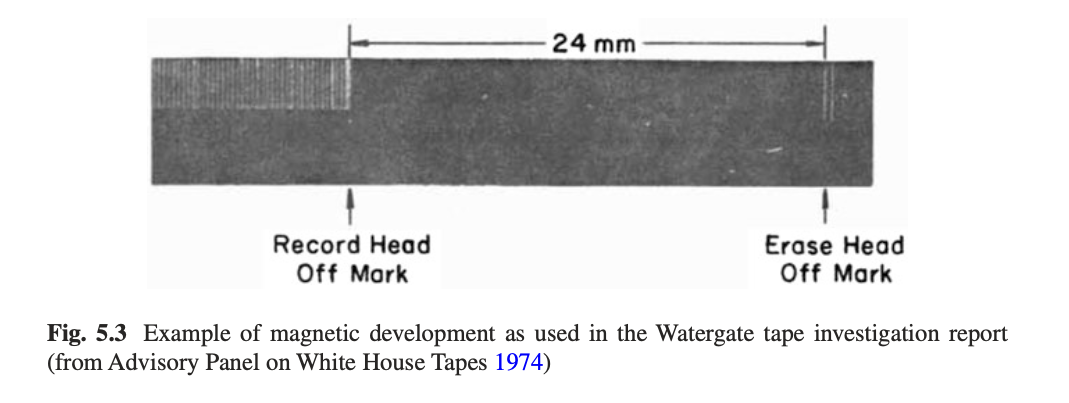
- Distinctive erase and record head magnetic signatures
- Any anomalies could indicate alteration
The Watergate Tapes
Transition to Digital: New Challenges
- Digital files are sequential lists of binary numbers
- Can be copied, transmitted, and stored with perfect fidelity
- Edits can be made surreptitiously with no physical trace
- If all you have is the file, you need other means to assess integrity
Types of Audio Forgery
- Deletion: removing time segments
- Insertion: adding new audio material
- Mixing: additively combining new material with the original
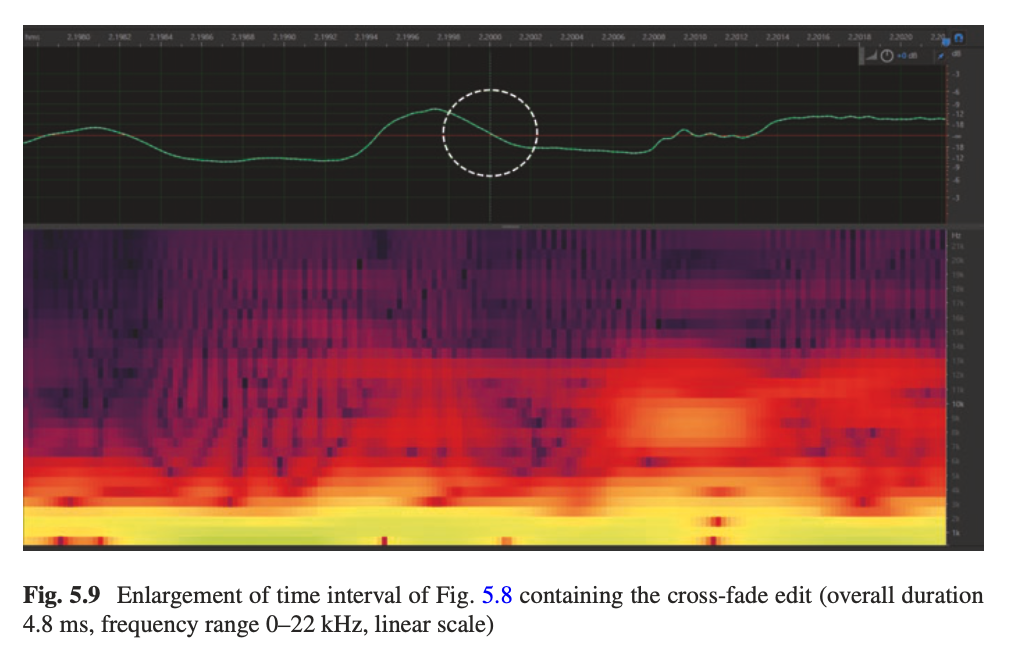
- Edit boundaries can be butt splices or cross-fades
Example: Original Recording
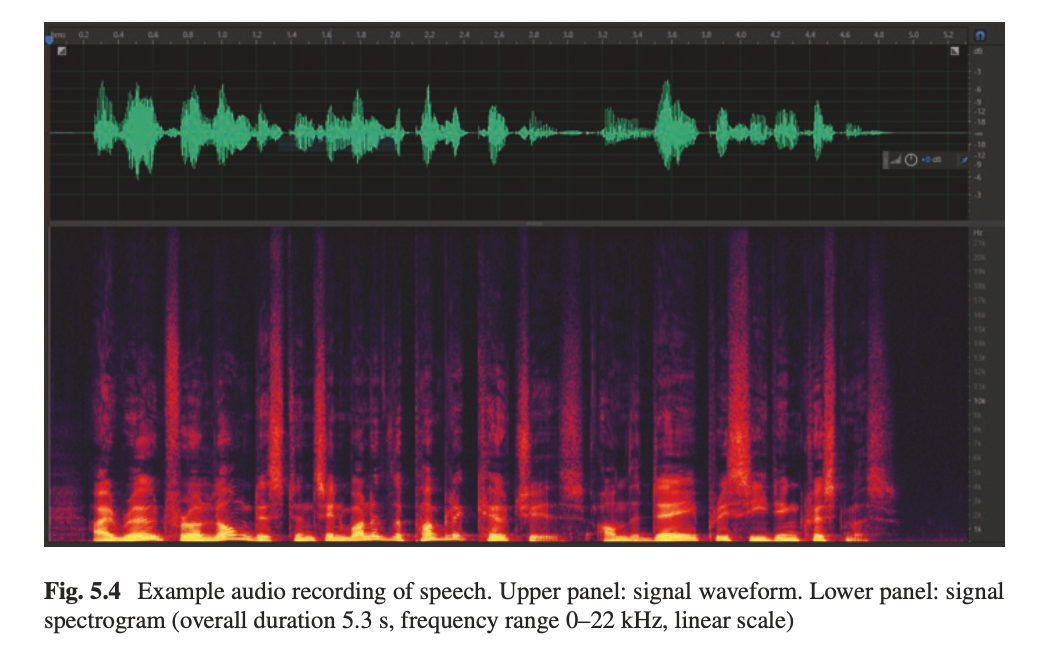
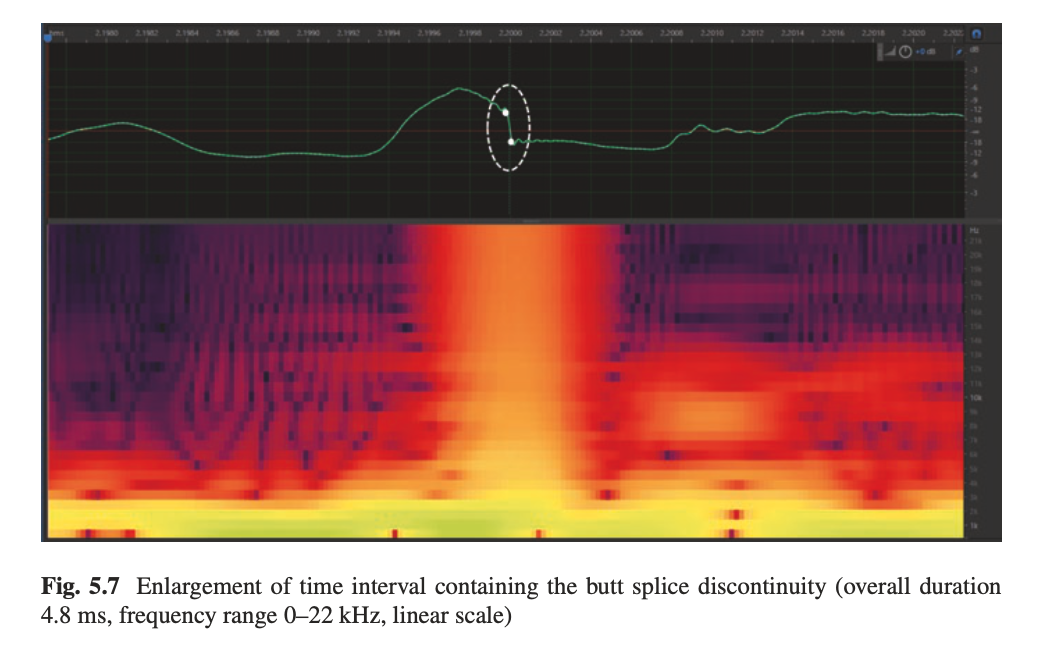
Butt Splice Deletion

The highlighted 0.4s section will be removed with a butt splice
Result of Butt Splice
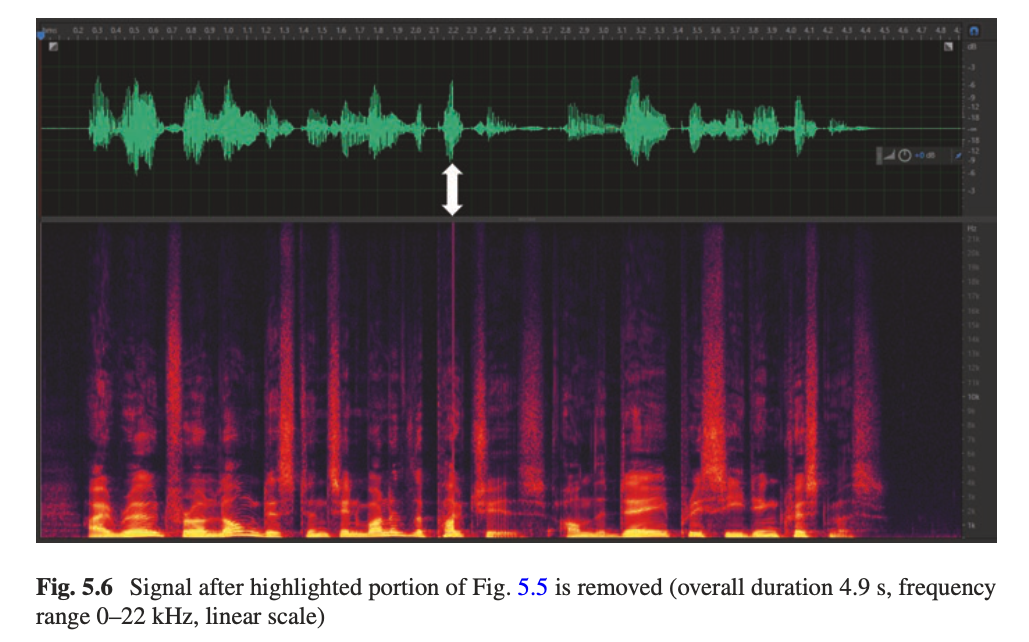
Zooming Into the Butt Splice
Cross-Fade Concealment

Same deletion, but with a 2 ms cross-fade instead of a butt splice
Zooming Into the Cross-Fade
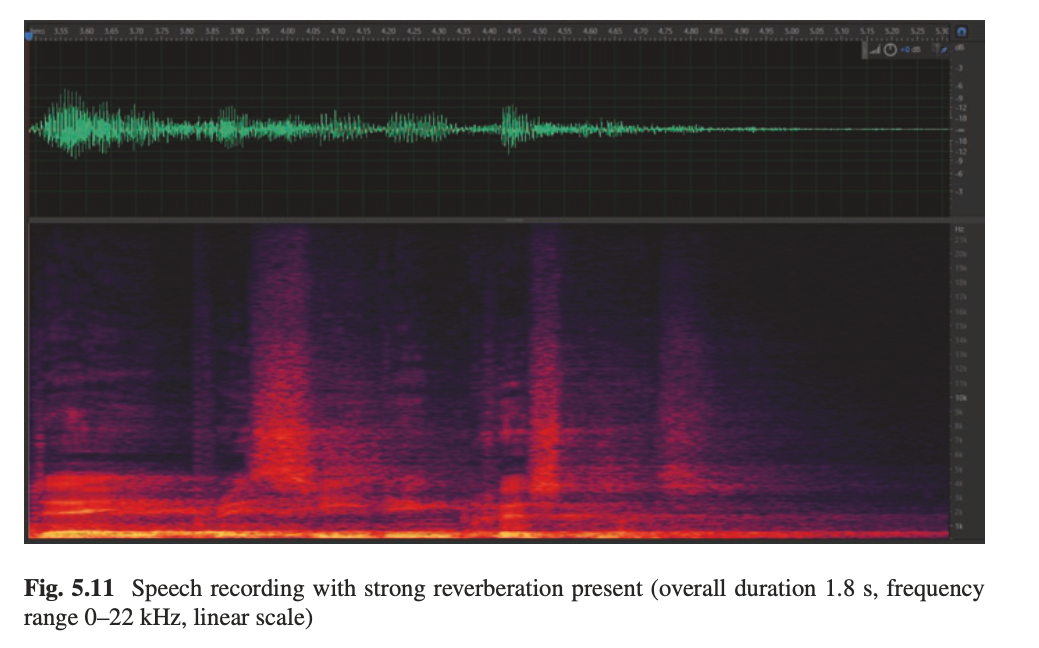
Reverberation as a Detection Tool
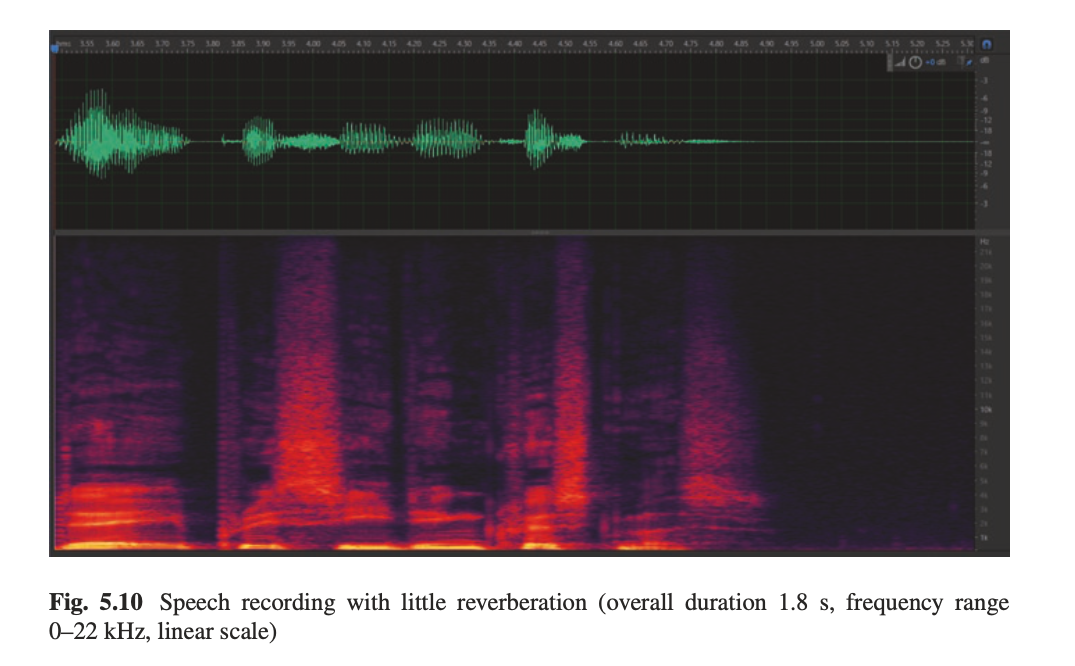
Speech With Reverberation
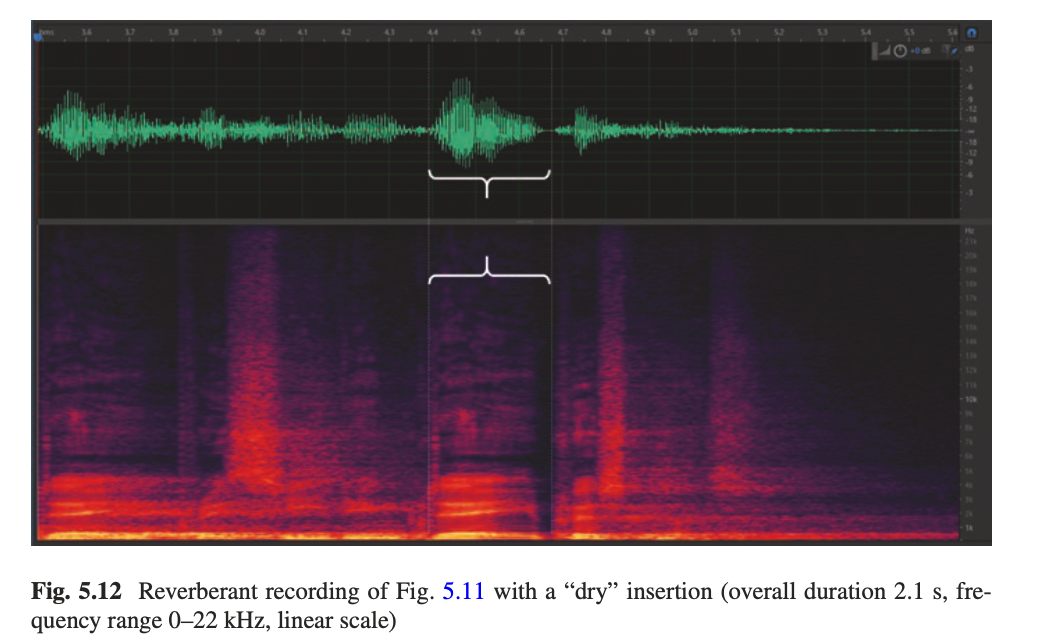
Detecting a Dry Insertion in a Reverberant Recording
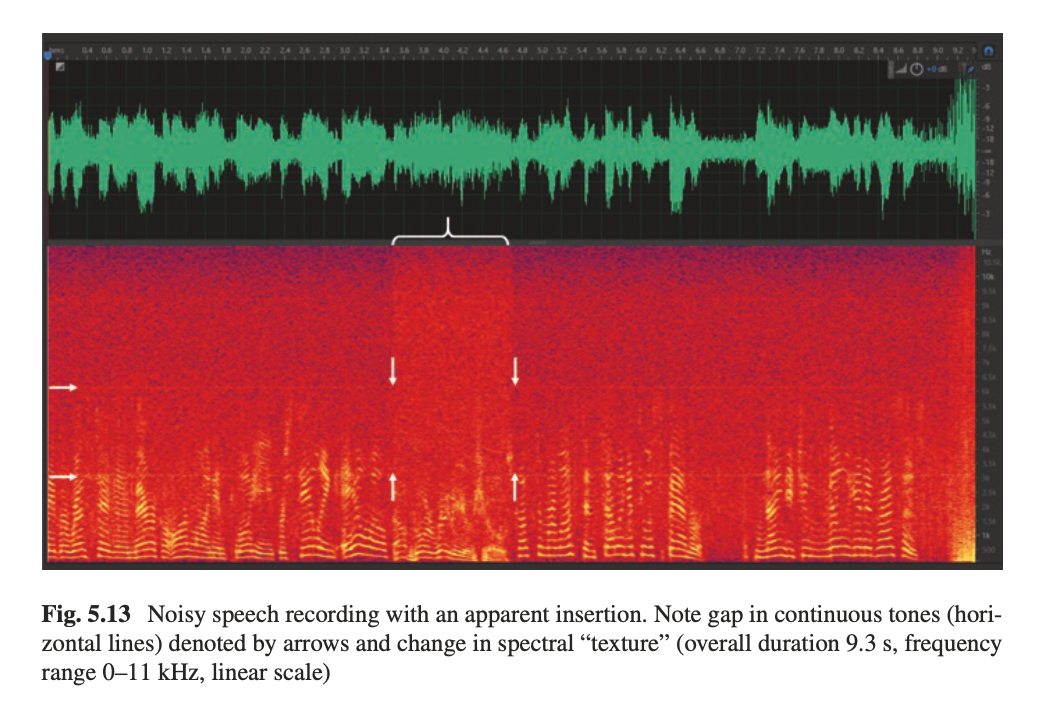
Background Sound Clues
Summary: What Examiners Look For
- Waveform discontinuities (butt splices, clicks)
- Spectral artifacts (broadband energy at edit points)
- Reverberation mismatches (dry vs. wet segments)
- Background sound inconsistencies (noise floor, tones)
- Acoustic environment changes (room characteristics)
- No single technique is foolproof; use them all together