Handling Forensic Audio Evidence
Chapter 4: Principles of Forensic Audio Analysis
- Digital files (CD, USB, email attachments)
- Proprietary device formats (surveillance systems)
- Analog tape recordings
- Need standard practices for all formats
- High-quality audio playback system
- Waveform display program
- Spectrographic display program
All typically performed on desktop or laptop computer
Audio Playback Requirements
- Frequency response: 50 Hz to 20 kHz
- Professional studio monitor speakers
- Professional-quality sealed headphones
- Separate volume control
- Moderate listening levels to prevent ear fatigue
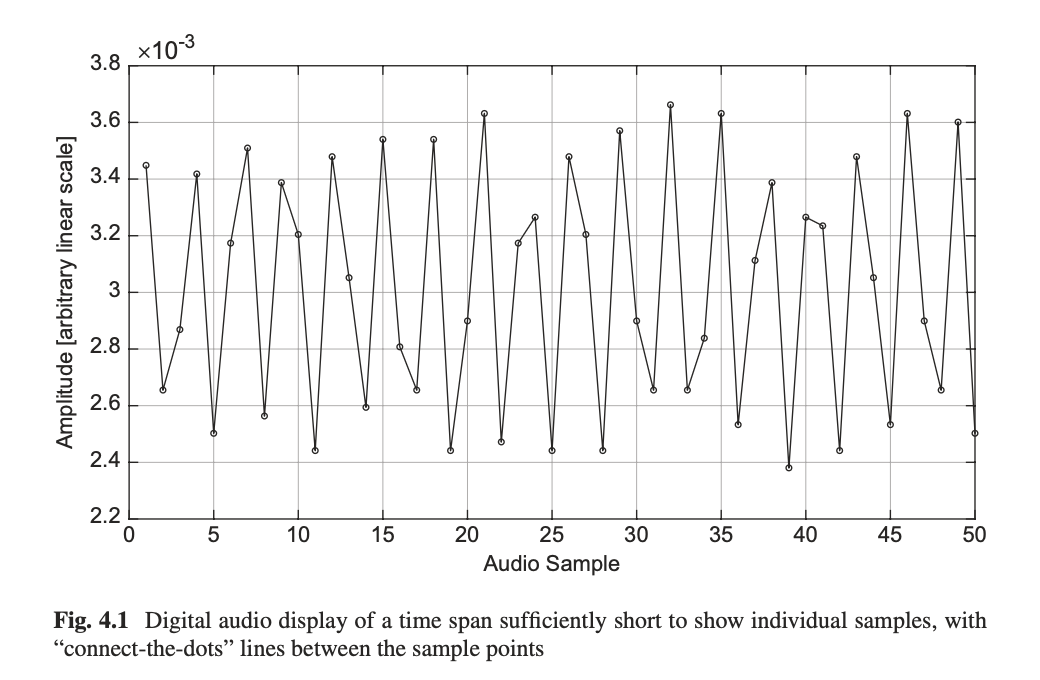
Time on horizontal axis, amplitude on vertical axis

- Zoom controls for time and amplitude
- Playback with cursor positioning
- Prevents inadvertent edits during viewing
Warning: Lossy Encoding
MP3 and similar formats are lossy
- Viewing requires decoding to PCM
- Re-saving creates second generation encoding
- Each cycle adds audible distortion
- Never decode, alter, and re-save in encoded format
Spectrographic View

- Horizontal axis: time
- Vertical axis: frequency (Hz)
- Color/brightness: signal energy
- Shows signal in frequency domain
Reading Spectrograms

- Impulsive sounds (clicks): vertical lines
- Continuous tones (whistles): horizontal lines
- Reveals frequency content over time
Time-Frequency Trade-off

Avoiding Bias in Examination
- Bias often comes from extraneous non-audio information
- Suspect histories, crime scene details, desired conclusions
- Examiner is not an advocate for either side
- Role: educate the court about the audio evidence from scientific standpoint
Initial Inquiry Checklist
- Is the original recording available?
- What were the recording circumstances?
- Quality assessment: good, marginal, or poor?
- Any authenticity disputes?
- Prior examinations conducted?
- Specific forensic questions to address?
Documentation Requirements
Detailed notes must include:
- Original recording or exact digital duplicate
- Equipment details (models, serial numbers, manuals)
- Maintenance/repair records
- Recording circumstances and location
- All recording process details
- Prior reports and transcripts
Evidence Handling Protocol
- Maintain chain of custody
- Document and photograph all materials
- Initial/label nondestructively
- Use write protection on devices
- Handle volatile memory carefully
- Work with verified digital copy, never the original
Initial Aural Evaluation
- Listen to verified work copy
- Quiet environment, moderate level
- Make preliminary notes
- Note quality, defects, audible events
- View spectrograms for additional insights
Critical Listening Process
- Very quiet surroundings, high-quality headphones
- Moderate playback level (avoid acoustic reflex)
- Iterative: listen multiple times
- Focus on foreground, then background sounds
- Avoid creating false percepts from looping
- Start with broad time range overview
- Zoom in successively on intervals of interest
- Look for discontinuities, dropouts, clicks
- Alternate between visual and aural assessment
Spectral Analysis Strategy

- Experiment with different block lengths
- Try various window functions (Hann, Hamming, Kaiser)
- Switch between settings for different purposes
- Combine spectrogram with waveform and playback
Minimum Analysis Suite
Following initial listening and spectrographic observation:
- Critical listening - focused audition
- Waveform analysis - visual time domain
- Spectral analysis - visual frequency domain
Keep comprehensive notes throughout!
Key References
- Audio Engineering Society (1996): AES27-1996 - Managing recorded audio materials for forensic examination
- Scientific Working Group on Digital Evidence (2008): SWGDE best practices for forensic audio
- Allen & Rabiner (1977): Short-time Fourier analysis and synthesis