Cockpit Voice Recorders
DAD 498: Audio Forensics — Week 14
Today’s Topics
- History of flight recording
- How CVRs work
- Recovery and legal protocols
- Three case studies
- Future directions
I. History of Flight Recording
From railroad ledgers to solid-state memory
The Problem: Crashes Without Answers
- Early accidents left investigators guessing
- No record of crew actions or voice
- Wreckage alone couldn’t explain everything
- Systematic recording seemed impossible
Early Milestones
- 1839 — Babbage proposes railroad crash recorder
- 1939 — Hussenot & Beaudouin: optical film recorder (France)
- 1942 — Finnish “Mata Hari”: metal foil styli recorder
- 1953–54 — Ryan patent; David Warren proposes CVR (Australia)
- 1965 — Recorders moved to the tail (empennage)

Modern Solid-State CVRs
- 1972 — Regulations prohibit pilot erasure of CVR
- Early 1990s — Tape replaced by solid-state memory
- Today — 2-hour buffer, four channels, crash-survivable
- Painted bright orange (not black) for recovery visibility
Discussion
- Why did pilots resist CVR mandates early on?
- How do disasters shape aviation safety rules?
- Should CVR recordings ever be made public?
II. How CVRs Work
Four channels, two hours, crash-survivable
Four Recording Channels
- Channel 1 — Pilot’s headset microphone
- Channel 2 — Copilot’s headset microphone
- Channel 3 — Cockpit area microphone (ceiling-mounted)
- Channel 4 — Intercom / passenger address system
The Memory Buffer Loop
- Records continuously, overwrites oldest data
- Minimum 2 hours of audio retained
- Older units: 30-minute loop only
- Starts recording when aircraft is powered up
Survivability Engineering
- Mounted in the tail (empennage) since 1965
- Bright orange for recovery visibility
- Withstands: extreme G-forces, fire, deep water
- The microphone doesn’t survive — the data does
- Underwater locator beacon: 30-day battery

Discussion
- Why is the cockpit area microphone forensically significant?
- What are the limitations of a 2-hour buffer?
- How does recorder placement in the tail affect what gets captured?
III. Recovery & Legal Protocols
Chain of custody in the cockpit

Immediate Steps at the Scene
- Deactivate CVR immediately (pull circuit breakers)
- Do NOT play back or open at the scene
- If found in water: pack in fresh water, keep submerged
- Ship directly to NTSB headquarters, Washington DC
- Source: Cockpit Voice Recorder Handbook for Aviation Accident Investigations
Chain of Custody
- Assigned to a single CVR specialist at NTSB
- Full extraction without filters — no processing yet
- Transcription done by a formal CVR Group
- CVR Group includes: FAA, manufacturer, pilot unions
Transcription Rules
- Document facts only: words and sounds
- No interpretation in the official transcript
- All participants sign nondisclosure agreements
- Unauthorized release is a federal offense
Discussion
- Why are pilot union reps included in the CVR Group?
- What conflicts arise between transparency and nondisclosure?
- How does “no interpretation” in the transcript shape the investigation?
IV. Case Studies
Three accidents, three roles for CVR analysis
Germanwings Flight 9525 (2015)
- Airbus A320 crashed in the French Alps
- 150 people killed — no survivors
- Captain locked out of cockpit mid-flight
- Copilot deliberately crashed the aircraft
Germanwings: What the CVR Captured
- Captain’s urgent knocking — then attempts to break the door
- Copilot’s slow, steady breathing throughout the descent
- No response to air traffic control
- Passenger screams in the final seconds
USAir Flight 427 (1994)
- Boeing 737 crashed near Pittsburgh
- 132 people killed — no survivors
- CVR captured unusual mechanical sounds
- Led to major Boeing 737 inspection program
USAir 427: “Clunks and Rattles”
- CVR captured unusual structure-borne vibrations
- NTSB reproduced sounds in laboratory experiments
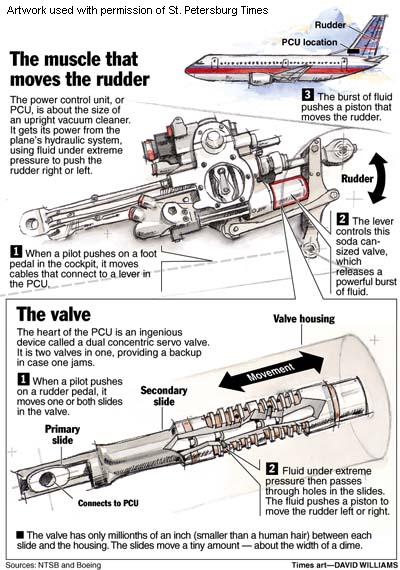
- Matched: rudder power control unit (PCU) failure
- Cause: sudden rudder reversal — “rudder hardover”
Execuflight Flight 1526 (2015)
- Beechcraft King Air crashed near Akron, Ohio
- 9 people killed — no survivors
- No flight data recorder on board
- Old analog CVR in poor condition
Execuflight: Engine Whine as Evidence
- No FDR — CVR was the only recorder
- Engine turbine whine captured on recording
- Whine frequency → turbine speed → throttle setting
- Crew failed checklist; should have aborted the approach
Discussion
- How does each case use CVR audio differently?
- What would investigators have missed without the CVR?
- What ethical questions does Germanwings raise about pilot privacy?
V. Future Directions
When the box can’t be found
The Recovery Problem
- Air France 447: 2 years to recover CVR (deep Atlantic)
- MH370: still missing — CVR never recovered
- Deep water, remote terrain, vast debris fields
- Locator beacon battery lasts only 30 days
Proposed Solutions
- Automatic ejection — CVR ejects and floats before impact
- Satellite streaming — Real-time transmission to orbit
- Extended beacons — Longer battery, stronger signal
- Some aircraft already carry upgraded systems post-MH370
Discussion
- Does real-time streaming change the privacy calculus for CVRs?
- Would streaming have solved the MH370 mystery?
- Who should have access to streamed flight data?
Key Takeaways
- CVRs capture 4 channels in a 2-hour crash-survivable loop
- Strict protocols protect both evidence integrity and pilot privacy
- CVR audio can prove intent, identify mechanical faults, and substitute for missing data
- Recovery limitations are driving a shift toward real-time transmission
Coming Up Thursday
- Major case studies in depth
- Air France 447: cognitive bias in the cockpit
- MH370: satellite pings and the limits of acoustic evidence
- CVR transcripts as a dataset: the Noort study